
They Turn Fish Into Wood, Mate
Category: Culinary Chaos 17th May 2026
Honestly, you ever see a block of katsuobushi up close? Looks like someone left a bit of ship's decking out in the rain, dried it, and then forgot to mention it was once a fish. Proper weird, that.
It starts like any sensible fish: a skipjack tuna filleted and simmered. Then they smoke the life out of it for weeks. But here is the bit that makes you go, "What?" They leave the smoked lumps to get colonised by mould on purpose. Yes, they let spores move in, dry the thing, scrape the mould off, then repeat. Over time the flesh turns rock-hard. Not chewy, not jerky, actual plank. People in Japan call it katsuobushi; outside you might know the shavings as bonito flakes.
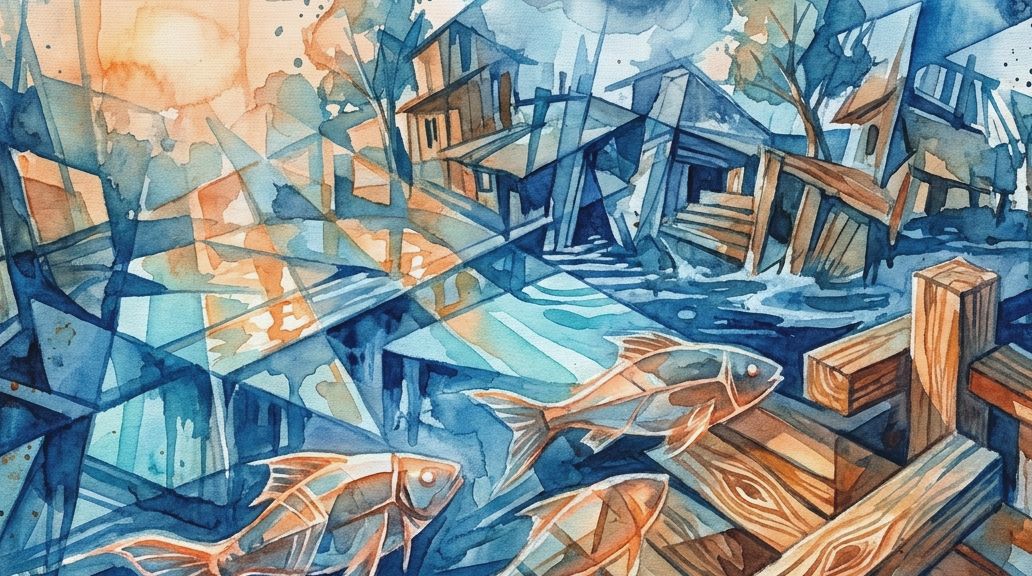
Why? Because the process concentrates flavours into something stupidly intense. When you shave those hard blocks you get feathery flakes that smell of the sea and, somehow, beef. Put them in hot water and you get dashi, the soup base every chef bows to. It is umami on steroids. Clever, ghastly, brilliant.
Best bit: when you sprinkle the flakes on a hot dish they look alive. Heat makes them twitch and curl, like a tiny fish sance. I remember seeing a bloke at a market staring at the flakes like he'd offended them. He almost apologised. It is both enchanting and a bit insulting to the memory of the original tuna.
People will tell you it is like making cheese, but with fish. They are not wrong. There is fermentation, mould management and patience. Whole blocks can be years old. You could keep one as a doorstop and it would outlast your trainers.
So there you go. We have civilisation where someone decided smoked fish was not finished until it was fossilised and then shaved into ribbons to make soup taste like heaven. Ancient, silly, and strangely sensible. I like it. Mostly because it makes me feel better about the way we eat stuff these days.