
They Put Beaver Castoreum In Your Food
Category: Culinary Chaos 2nd July 2026
Funny thing about food: we like things called 'natural' and 'artisanal' until you find out what that actually means. Castoreum is a brownish, leathery-smelling secretion from a beaver's castor sacs, and for centuries perfumers loved it. Then someone realised it tastes a bit like vanilla and berries, and the food world had a proper chuckle followed by some paperwork.
Yes, it's real. Those castor sacs sit near the base of the tail. The beaver uses the stuff to mark territory. Humans, with the patience of saints or the tastebuds of eccentrics, decided it makes a decent flavouring. Regulators in places like the United States and Europe have allowed castoreum as a "natural flavouring", so technically you can find it in ice cream, candies and syrups. Technically, not frequently. It's expensive and fiddly to get, so most factories use synthetic vanillin instead.
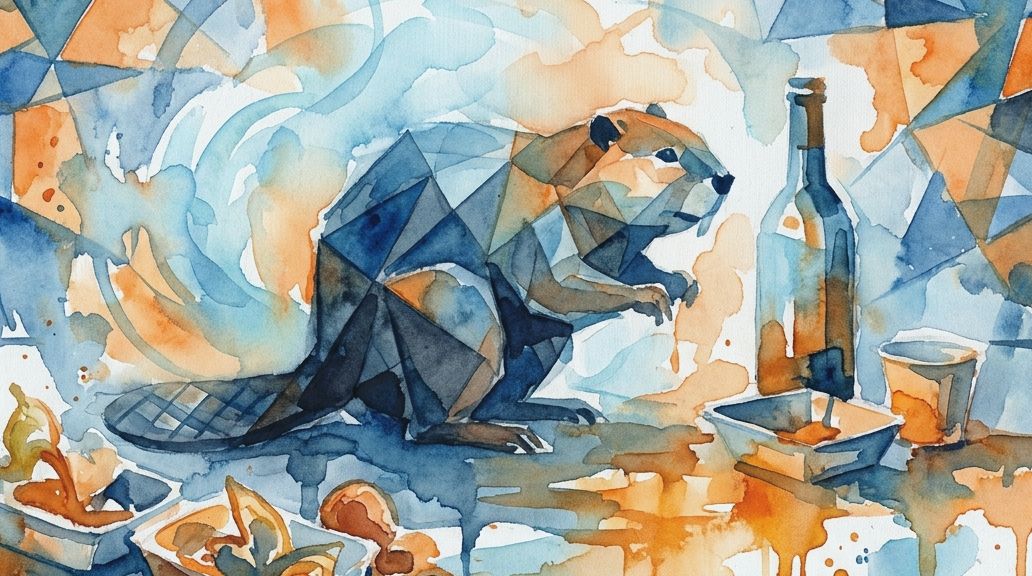
People imagine vats of beavers queued up like some medieval abattoir. It is nothing like that. You need castoreum from wild beavers and you collect it from animals that have been trapped for fur or from ones that die naturally. This makes it rare and pricey. For the big brands it is easier to make the lab stuff that tastes like vanilla and costs thirty pence a tub.
I remember years ago being in a fancy food shop and seeing 'natural raspberry extract' slapped on a jar. I asked what that meant. The bloke behind the counter smiled like he'd been told my house had a moat. "Natural," he said, as if that cleared everything up. I left imagining a beaver in a lab coat bottling its scent and thought, well, if posh marmalade needs a mascot, why not.
Here is the proper daft bit: castoreum is more of a curiosity than a common flavour source today. It turns up in niche perfumery and occasionally in artisan foodstuffs. Mostly it survives as one of those tiny facts you trot out at parties when you want the room to go quiet and a bit uncomfortable. Works every time.
So next time some label boasts 'natural flavours', you can wink, think of a beaver marking its patch, and carry on eating. Life is full of small betrayals, isn't it?