
Those Daft Witch Marks In Old Houses
Category: Superstitions & Lore 7th July 2026
Alright, so you pop into an old pub or a creaky farmhouse and spot a crude star or a cross scratched into a beam and think someone was practising carpentry with a potato peeler. Turns out those little daisy-wheels, VV shapes, and random crosses are proper purposeful. They are 'apotropaic' marks, which is posh talk for 'marks to stop bad luck and witches'.
People carved them around fireplaces, doors, windows, and even church fonts. See a wheel scratched above the hearth? That was meant to catch evil like a flypaper for spirits. Put marks at thresholds? That was so witches could not slip in while you were watching telly or minding the baby. Ridiculous sounding, but lots of archaeologists and heritage groups have found thousands of these across Britain and Europe, tucked away where you least expect them.
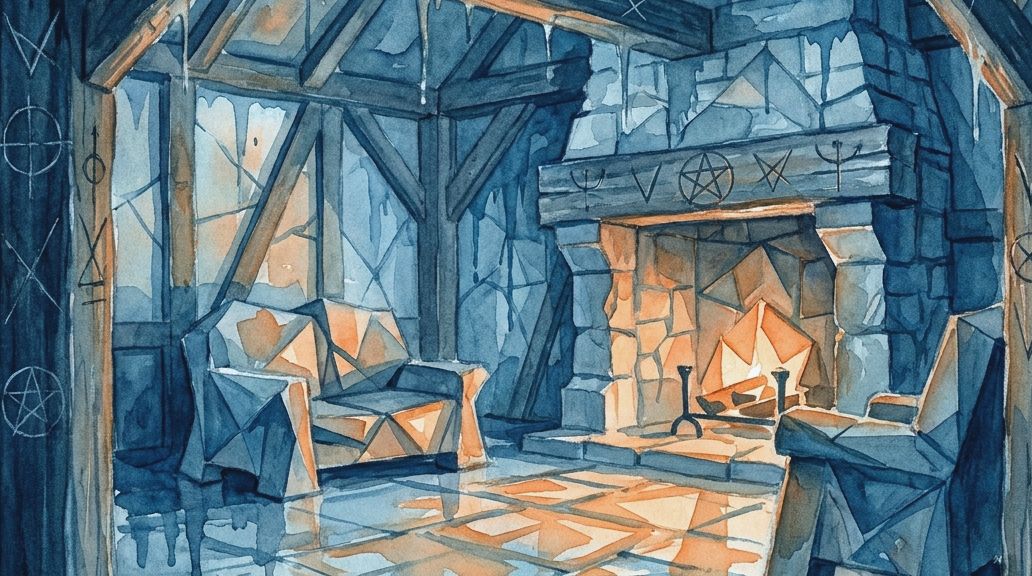
I remember years ago a mate dragged me up into an attic of an old inn. There were half a dozen daisy-wheels around the chimney, burned-in scorch marks too, like someone had tried every trick in the book. They mixed symbols, burns, scratches and hidden objects. It was like a medieval Home Alone: traps, bells, and a smidge of superstition.
They vary. Some are simple crosses. Some are interlaced circles, hexfoils, or repeated V marks thought to stand for Virgo or invoke the Virgin as a protector. Others are more abstract, mason's marks or initials, sometimes confused with builders' doodles. Context matters. If it is near where water or babies are kept, odds are it's a protective thing, not a lazy signature.
People often dismiss them as quaint, but they tell you what people feared. Storms, witchcraft, envy, sudden illness. Before insurance and doctors you scratched a wheel in the plaster and hoped for the best. Bit crude? Yes. Bit lovely? Also yes. It makes an old house feel less anonymous, like someone left a secret sticky note: "Mind the witches."")