
How Photographers Sold You Ghosts and Everyone Took the Money
Category: Victorian Weirdness 12th June 2026
Curiously, in the mid-19th century an enterprising sort discovered a new business model that combined bereavement, chemistry and theatrical fraudulence: spirit photography. The basic offer was disarmingly simple. You pay for a likeness of Aunt Mildred; the photographer produces Aunt Mildred plus a ghostly, transparent chaperone hovering behind her shoulder. The bereaved leave convinced, the curious left delighted, and the moral philosophers left clutching their pocket watches.
The most famous exponent was William H. Mumler, who began making pictures in the 1860s and advertised that his plates sometimes revealed 'spirits' of the dead. It appealed wonderfully to a Victorian temperament: enormous feelings, enormous mourning etiquette, and an appetite for scientific-sounding explanation. If you had lost someone to the civil commotions or to an unaccountable cough, and needed proof the dearly departed were still about and rather interested in your parlour furniture, a spirit photograph did the trick.
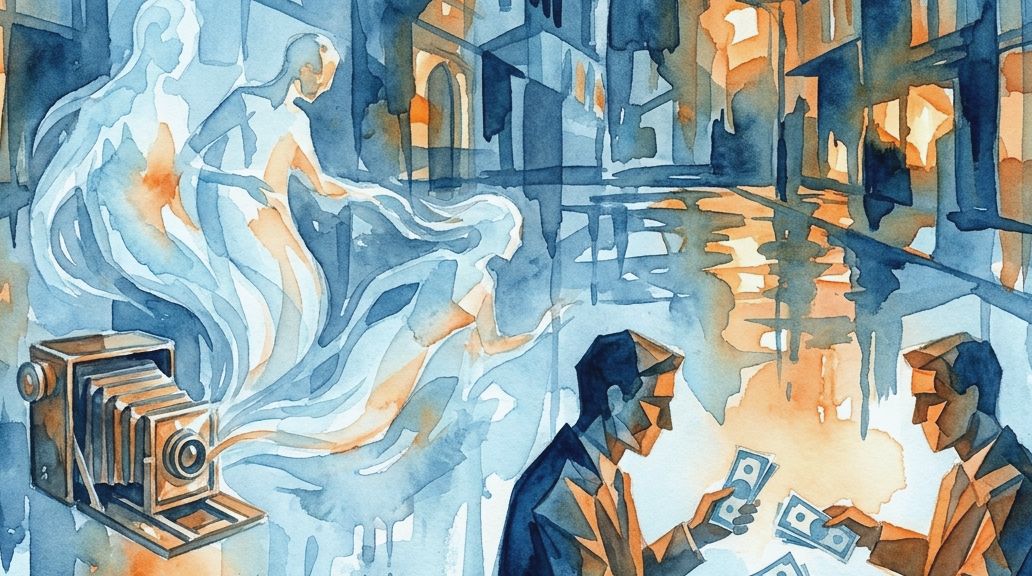
How was it done? The honest answer is: the same tricks any decent charlatan with a darkroom and a talent for timing could pull off. Double exposure, pre-prepared plates, and an admirable lack of scruples about swapping negatives made for ghostly apparitions perfectly suited to candlelight and a nervous disposition. The trickery was not remotely subtle, but in an era when photography itself still persuaded people it had captured a soul, the faint pallor of a 'spirit' read as confirmation rather than a photographic blooper.
It ended, theatrically. Mumler was taken to court in 1869 on charges of obtaining money by false pretences. The trial was a delightful little ritual of the age: prominent witnesses, ardent spiritualists insisting on the authenticity, cynical journalists pointing at the darkroom, and a jury that could not quite agree on how much grief one ought to monetise. He was acquitted, which in Victorian terms was rather like being given a leave of absence from morality.
The curious legacy is that spirit photography crystallised an awful truth about the period: a hunger for supernatural consolation was eminently marketable and legal institutions were remarkably tolerant of people who mixed commerce with comfort. Which, if you ask me, is not a diagnosis of their civilisation so much as an observation about human taste when dressed up in a top hat and a solemn face.