
That Russian Tower Made From Straight Sticks
Category: Architectural Wonders 13th July 2026
Ever stood under one of those lattice towers and felt like you'd walked into someone's bizarre DIY tinsel? Right, that's Vladimir Shukhov's handiwork - proper engineering that looks like modern art got bored and went to work. The daft bit is this: the curvy, graceful shells are made from nothing more complicated than straight steel beams.
Shukhov was a Russian engineer at the turn of the 20th century who realised a mathematical neat trick: certain curved shapes can be built from straight lines. The result is the hyperboloid of revolution - a surface that looks rounded but is actually a network of straight bars. He used that idea for water towers, lighthouses, pavilions and the famous radio mast on Shabolovka in Moscow in the early 1920s.
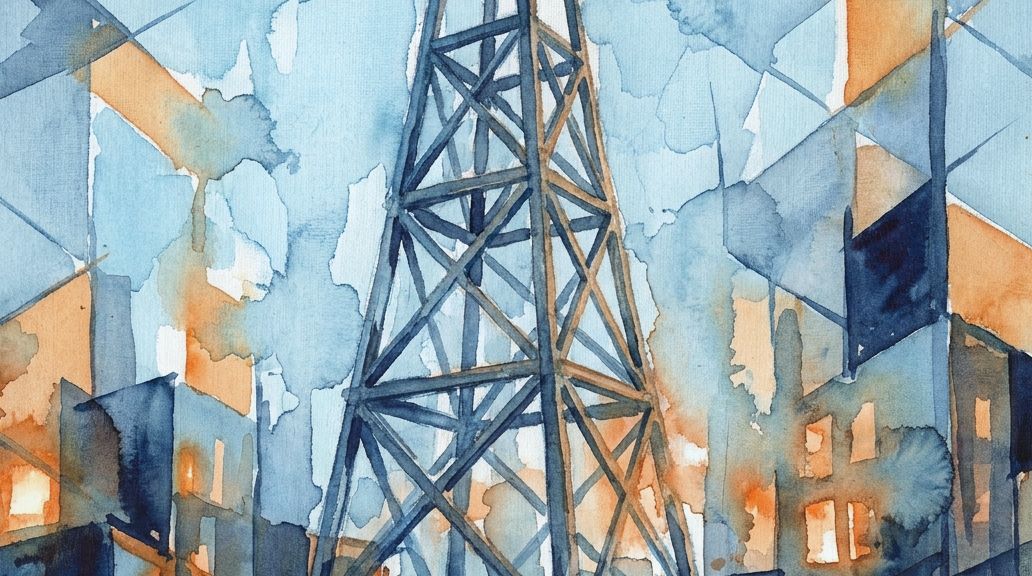
What makes it proper clever is efficiency. Because the shape is a ruled surface you get strength for almost nothing - less metal, less weight, same theatrical skyline. Back then materials and labour were money; Shukhov's towers were cheap and light, but also elegant enough to make architects at dinner feel inadequate.
If you go and gawp at one - I did, years ago, squinting up at the steel like it owed me money - you notice they're almost lace-like. From a distance they read as a smooth curve. Up close it's all straight rods crossing each other, making triangles that refuse to fall down. It's like someone taught geometry to a scaffolder and they became an artist.
Also, the design is flexible. Shukhov's idea was used for everything from exhibition pavilions to industrial chimneys, and the technique turned up in towers and roofs around the world. People keep thinking the shape is some fiendish modern invention. Nope - it's turn-of-the-century cleverness that still looks futuristic. That, to me, is the daftest part: old engineering that keeps making newer stuff look like posers.