
How Rome Sweetened Wine with Lead
Category: Culinary Chaos 15th June 2026
Pray do not think the ancients were culinary philistines; they were merely inventive to the point of impertinence. Facing the universal problem of keeping wine palatable on a hot day or during a long voyage, Roman cooks boiled down grape must until it concentrated into syrups called defrutum or sapa. That part is sensible, rather like making a cordial. The part that is less sensible, and rather terrains of genius meet idiocy, is that they often did this boiling in lead-lined pots or with lead-containing vessels.
When grape must meets lead, chemistry performs a small but emphatic trick: acetic acids react with lead to form lead acetate, a crystalline salt that is, bafflingly, sweet. It gained the picturesque sobriquet 'sugar of lead'. So the syrup that the Romans prized for sweetening and preserving wine could be, and often was, doped with a pleasantly sweet but decidedly metallic compound.
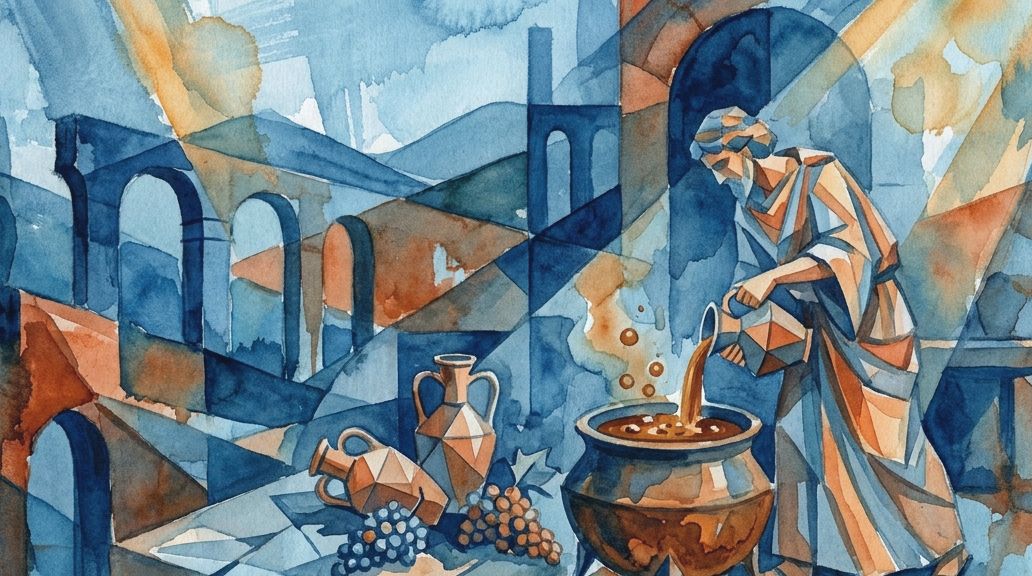
Romans used the syrup for more than mere dessert; it seasoned wine, glazed fruit, and helped preserve food for military campaigns and long-distance trade. The practice was convenient, cheap, and highly effective as a preservative. Curiously, it was also an excellent vector for ingesting lead, because the sweet taste hid the presence of a heavy metal with very poor manners in the human body.
Archaeological studies have found elevated lead in ancient plumbing, cookware, and even in some human remains from Roman contexts, so this is not merely an amusing hypothetical. Scholars debate how much this contributed to the health of elite Romans, and sensible historians avoid grand claims that an entire empire was felled by indigestion. Still, one can imagine senators raising goblets to health while their corporal chemistry filed a complaint.
It remains a deliciously sharp reminder that culinary expedients, however ingenious, have a habit of boasting improvisation and then quietly ruining the guests. The Romans were brilliant engineers, poets, and senators; they were also perfectly capable of inventing a syrup that tasted delightful and behaved like an uninvited toxic lodger. I find that comfortingly human, if mildly alarming when one is fond of classical banquets.