
When the Victorians Went Mad for Leeches
Category: Victorian Weirdness 5th June 2026
Picture a nation convinced that the human body was a plumbing problem with character. In the long, sensible nineteenth century the remedy for about everything from a headache to a broken heart was: remove a dash of blood and call it progress. Leeches were the hired hands of this audit, small, saucy, and dreadfully fashionable.
Physicians prescribed Hirudo medicinalis with the zeal of a new religion. Leeches travelled in moss, in jars, and occasionally in very damp regimented indignity - shipped across borders to satisfy a demand that outstripped nature's patience. It became a proper trade: collectors scoured marshes, apothecaries kept pots of the beasts like parlour pets, and middlemen pondered the market price of a good, trustworthy sucker.
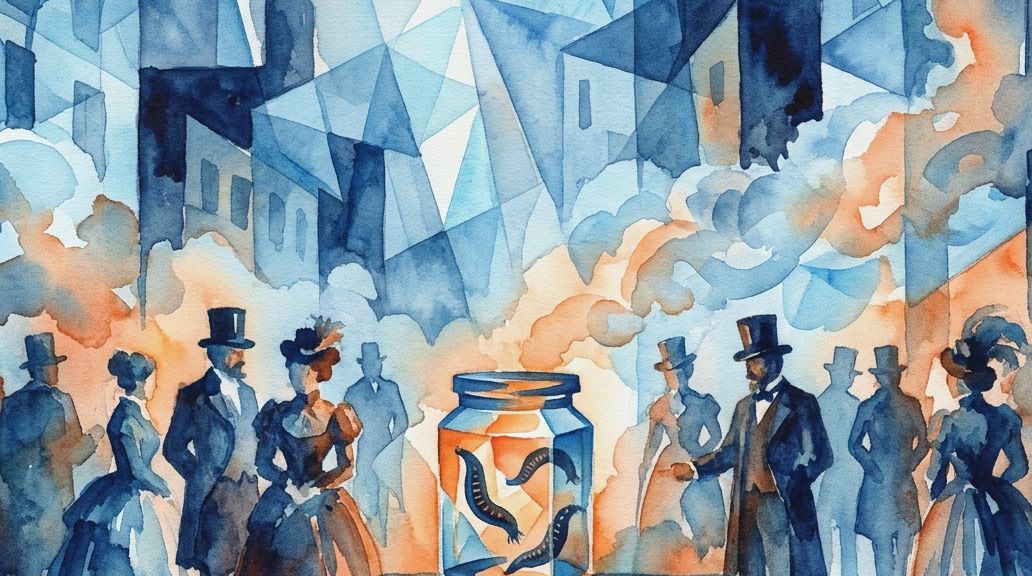
The economics were magnificent in their mediocrity. Leeches were bought and sold by the dozen, counted and conserved like small, flabby investments. Overharvesting followed with all the predictable grace of Victorian industry: populations fell, marshes were scoured, and collectors grew sulky and impoverished. Doctors, never ones to be put off by ecological misfortune, simply shifted suppliers or invented new reasons why bleeding would help.
There was also a social theatre to it. Having a leech applied in your morning room signalled you were afflicted, refined, and in possession of a servant willing to hold a basin. A solicitor might arrive flushed, have a leech applied, and depart looking mildly moral; a lady could parade her ability to endure a small puncture with the stiff upper lip of someone who had read five novels and one medical treatise.
Ridiculous as it sounds, the practice has a modern coda. Those very same creatures, after a century of disgrace, are now used in specialised surgery to discourage clotting and save delicate grafts. The Victorians would have been thrilled: their little black-market pharmacists have finally graduated into sterile hospital use, which is either redemption or the most peculiar form of recycling. I, for one, remain unconvinced until the leech presents a receipt for services rendered.