
That star's basically a diamond, mate
Category: Outer Space 3rd June 2026
Mate, there is a proper daft thing in the sky called BPM 37093 - astronomers nicknamed it "Lucy" because of the Beatles and diamonds reference - and it's not your usual twinkly. It is a white dwarf, the husk left when a star like our Sun finishes cooking. As it cools, its interior actually crystallises. In other words, the core turns into solid carbon and oxygen, like a giant diamond forming from the inside out.
Don't picture a sparkly engagement ring floating about. This is a lump the size of a planet, dense and dead silent. White dwarfs are about the size of Earth but with the mass of the Sun shoved in. When the temperature drops enough, physics says the ions in the core lock into a crystal lattice. Astronomers listened to the star's tiny pulsations and realised the pattern matched a crystallised interior. That observation was the first real proof that stars can literally crystallise as they cool.
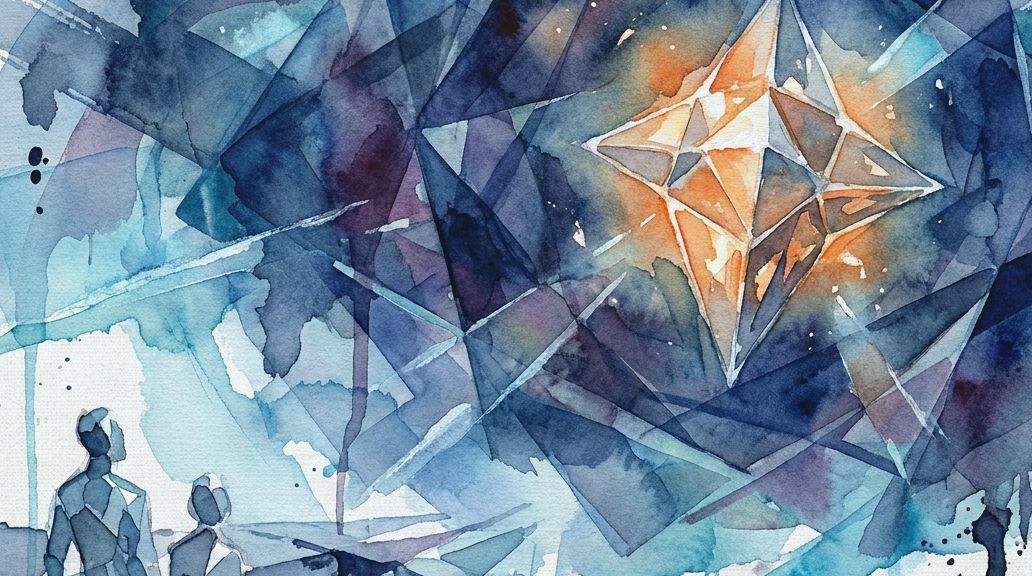
People love the headline "diamond star" and it makes for good pub chat. But it's worth noting the chemistry is simple: mostly carbon and oxygen. It's not cut by some space jeweller and set into a ring. It's more like the universe left a massive piece of rock in the sink and walked off. Still, the idea of a planet-sized diamond is a right image. You cannot help but think of some daft cosmic garage sale.
Why does it matter? Because it gives astronomers clocks. Crystallisation changes how the star cools and how it vibrates, which tells us age and what the inside of dead stars is really like. For people who like neat endings, it's comforting: even when stars die, they get a tidy makeover. Me? I like that the universe makes ridiculous jewellery and doesn't even care if anyone notices. Proper cosmic gall, that is.