
They Sewed A Pig To A Capon And Called It Dinner
Category: Culinary Chaos 4th August 2026
Medieval banquets were not shy about drama. If you wanted to make your guests gasp, you did not pass around another tureen; you produced a cockentrice: a stitched-together beast built from two animals, commonly a suckling pig and a capon or turkey, roasted to a gleaming, theatrical finish. It was less food and more edible stage prop - the culinary equivalent of dressing a horse in armour and calling it fashionable.
The trick was as much spectacle as sustenance. Masters of the kitchen would debone or partially prepare each creature, join them so limbs continued in ridiculous continuity, and sew skin to skin. The hybrid was often glazed, gilded with egg or leaf, and presented with trumpets and pomp. At the high table it performed a kind of gastronomic pantomime: guests admired its absurdity, nobles feigned delight, servants carved discreetly and everyone pretended there was nothing at all indecent about a pig with a chicken's head.
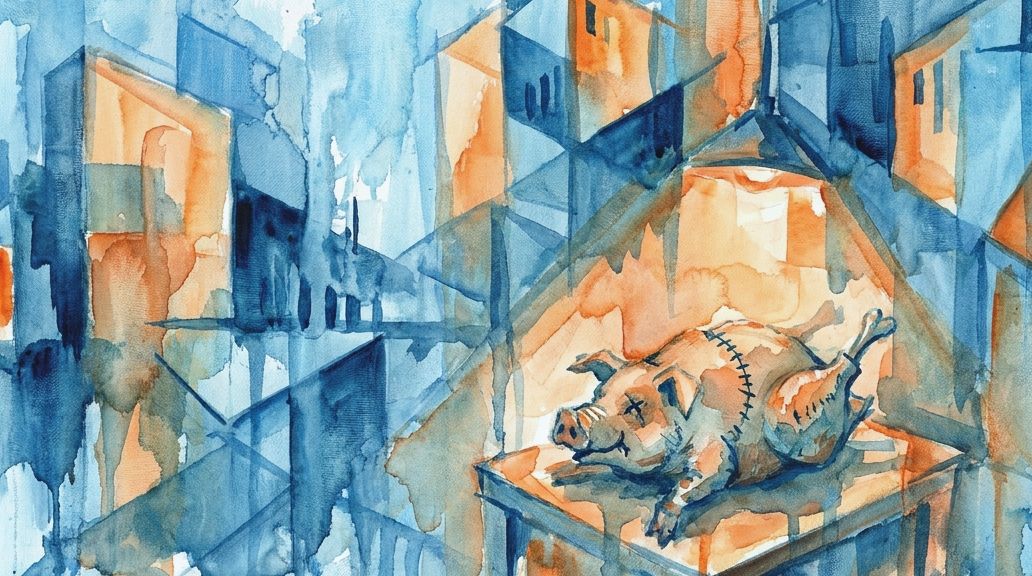
References to cockentrices turn up in medieval and Tudor feast accounts and recipe collections; they were a staple of the entremet tradition, those showy in-between dishes intended to entertain between courses. The point was social theatre: food made to shock, amuse and remind you that the host had money, surgeons on call, and a deep enthusiasm for theatrical butchery. It was, frankly, the original dinner-party flex.
Modern dining avoids sewing farm animals together as a rule - health inspectors are allergic to both creativity and lawsuits - but the spirit survives. Think of the turducken and its kin: poultry stuffed into poultry stuffed into poultry, a 21st-century descendant wearing less embroidery and more butter. If you ever attend a themed banquet and someone suggests resurrecting a cockentrice, say yes only if you enjoy explaining to your neighbours why there is a stitched pork shoulder in your oven and an outraged capon's wing poking out like a bad idea.