
The Victorian Who Ate Fossil Poo
Category: Eccentric People 3rd July 2026
William Buckland was an Oxford chap in the 1800s who decided being a scientist meant getting your hands filthy and your gob involved. He studied weird bits of rock and bone from caves and, among other things, identified something called 'coprolites' - fossilised poo. None of us would blame him if he stuck to drawing diagrams. He did not stick to diagrams.
Buckland argued that these odd, stony lumps were old animal droppings. How to be sure? He examined their shape, their content and, yes, he tasted them. Proper literal tasting. If you think that's a modern prank, no. Victorian naturalists sometimes took directness to a new level. Buckland chewed a chunk to confirm it smelt and tasted of bone and fish fragments, which helped him show the animals' diets. That mouthful convinced him they were faeces, not some shy sort of rock.
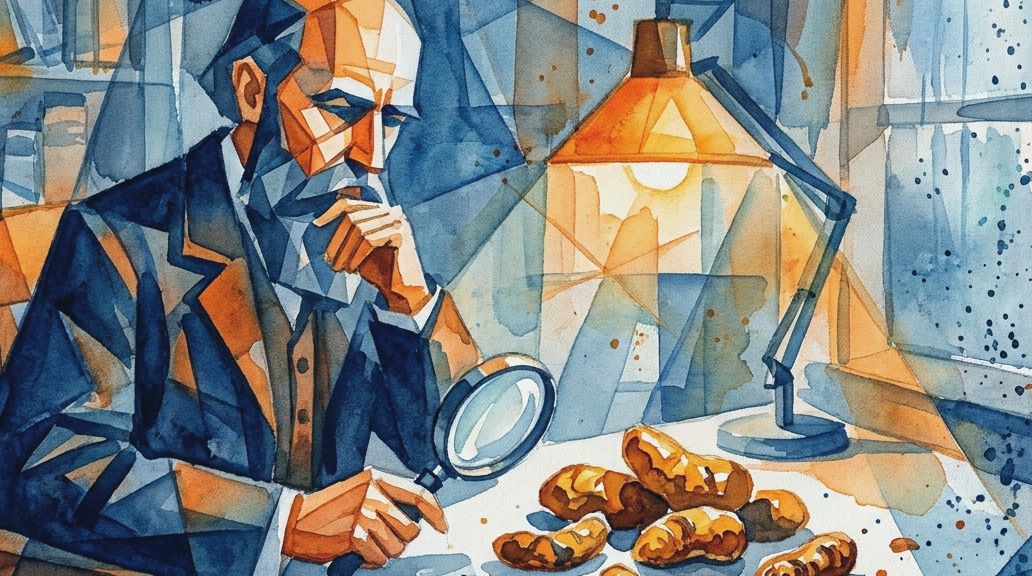
This is not a gag. Buckland published his coprolite work in the 1820s and 30s, using them to reconstruct ancient ecosystems. He used careful sleuthing - teeth marks, bone fragments, mineralisation - and then followed up with personal verification. Imagine the meeting: "Right, we've got petrified poo from a cave. Anyone fancy a nibble?" You'd expect polite coughing. Instead, science marched to the front and Buckland did the honours.
What I like about this is not the grossness. It's the conviction. A bloke in a frock coat took a sample, looked it in the eye and decided to test reality by putting it in his mouth. Proper commitment. It feels both absurd and gloriously simple, like a man checking if his tea's gone off by having a sip.
There's a lesson here. Eccentricity and curiosity often go hand in hand. You can mock the method - and you should, a bit - but the result mattered. Buckland's work helped people understand extinct animals and the caves they lived in. He proved that sometimes science is a bit daft, and that is part of its charm. Also, I would not taste it. No chance, mate.