
Those Tiny Spare Bones Hiding In Your Skull
Category: Human Anatomy 22nd July 2026
Ever toyed with the idea that your skull might be slightly dafter than your neighbour's? Meet Wormian bones: tiny, extra bits of bone that turn up in the cranial sutures like surprise hardware left behind by evolution. They are real, they are harmless in most folk, and they are properly useful for confusing radiologists when they are trying to decide whether you had a nasty knock or just a quirk of anatomy.
Technically they are called intrasutural or sutural bones and they usually nestle in places like the lambdoid suture at the back of the head. Ole Worm, a 17th century anatomist with a delightfully old-fashioned name, gets the credit for noticing them, which is why they keep his memory alive in slightly morbid classrooms. Most of us will have one or two without ever knowing it; in certain genetic conditions such as osteogenesis imperfecta or in metabolic bone disorders they pop up in much greater numbers. That is when you stop calling them curiosities and start calling them diagnostic clues.
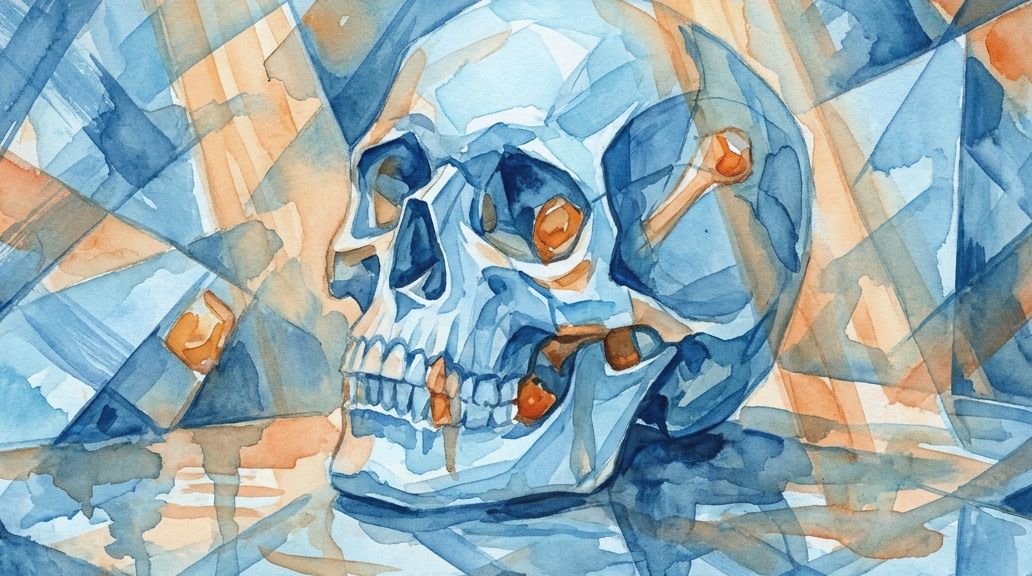
Why anyone should care beyond the forensic geekery is simple: on an X-ray a Wormian bone can impersonate a skull fracture unless you know what you are looking at. Anthropologists love them because their frequency and pattern vary between populations, giving little clues about ancestry and childhood health. Occasionally an infant can have multiple tiny ossicles while the skull is still sorting itself out; in adults they tend to be stable oddities. So the next time someone tells you your head looks like it was assembled at a spares counter, tell them you are just well stocked with evolutionary leftovers. And if a surgeon ever complains, tell them to mind their manners and their instruments, because you might be carrying a dozen of these dainty extras and none of them are up for eviction.