
The Toad That Grows Babies On Her Back
Category: The Animal Kingdom 27th June 2026
Behold a creature that has taken 'hands-on parenting' and turned it into a horticultural horror show. The Surinam toad, Pipa pipa, does not fuss with cradles, nappies or Instagram. She lets her own skin become the nursery. Eggs are fertilised, pressed onto the female's back, and her skin grows up around them to form little pockets. Inside those epidermal pouches the embryos develop from yolky eggs into tadpoles and then, astonishingly, into fully formed froglets.
The process is not theatre. It is blunt, practical, and a touch medieval. After the male performs a squelchy version of amplexus and deposits the fertilised eggs onto the female's dorsum, her skin thickens and envelopes each egg in a flasklike pocket. For weeks the youngsters live in this biological honeycomb, feeding on yolk while their bodies rearrange themselves. When development is complete they do not awkwardly wriggle free as tadpoles; they poke through the skin as small, fully formed toadlets and clamber off into the water like tiny veterans who have already seen a thing or two.
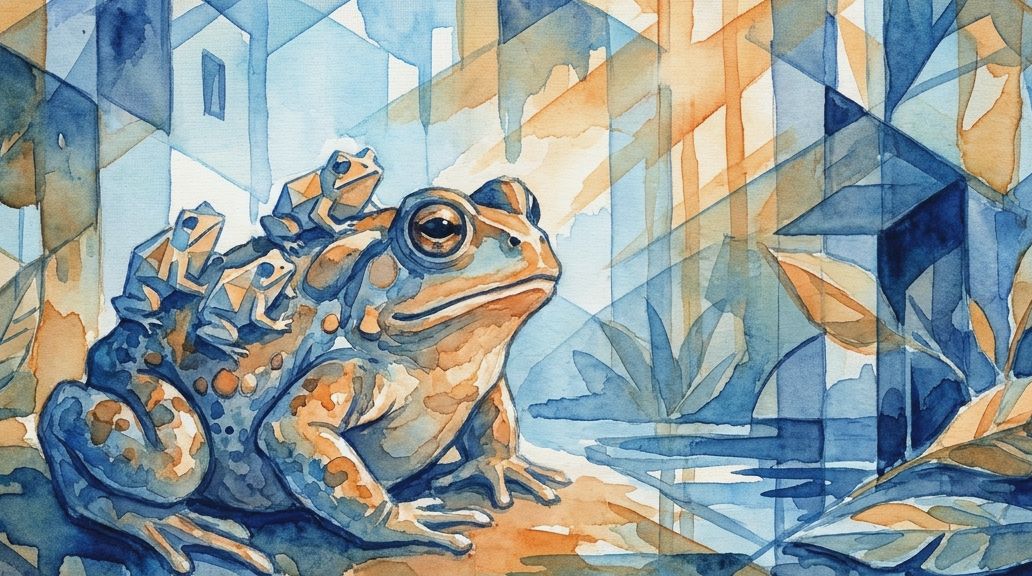
It sounds like something dreamed up by a horror writer with a fondness for amphibians, but it is a tidy evolutionary solution. In murky Amazonian ponds where predators are keen and eggs are fragile, parking offspring in a mobile, hidden brood chamber raises survival odds. The female's back acts as a waterproof incubator and a shield. She sacrifices a patch of skin, but suffers no permanent disfigurement; after the young depart, her back heals as if nothing especially odd had occurred.
I once showed this to a friend and watched their face rearrange through disbelief, fascination and a mild sense of betrayal by nature. There is a sublime gall to it: a mother who literally carries her brood on her back until they toddle off. If you are looking for proof that evolution has a wicked sense of humour, Pipa pipa will supply it, wrapped in bioengineered parenting and topped with a chorus of wet applause from the pond.