
Parrotfish Sleep In Mucus Cocoons
Category: The Animal Kingdom 9th July 2026
Night, if you are a parrotfish, means making a personal sleeping bag out of your own spit and calling it a day. Yes, a literal mucus cocoon: some parrotfish secrete a slimy envelope from glands in their throat as dusk settles, wrap themselves inside it, and bob gently in reef nooks until sunrise. It is equal parts gross and actually genius.
Scientists have been poking at this for a while and the takeaways are deliciously specific. The cocoon seems to do two main jobs: it helps block the fish's scent from night predators and it keeps parasites and tiny annoyances from crawling into their gills while they nap. In other words, it is perfume and pest control, all from your own biology. Some studies suggest the mucus might contain chemicals that deter parasites, so this is not just a passive blanket; it is biochemical bedtime couture.
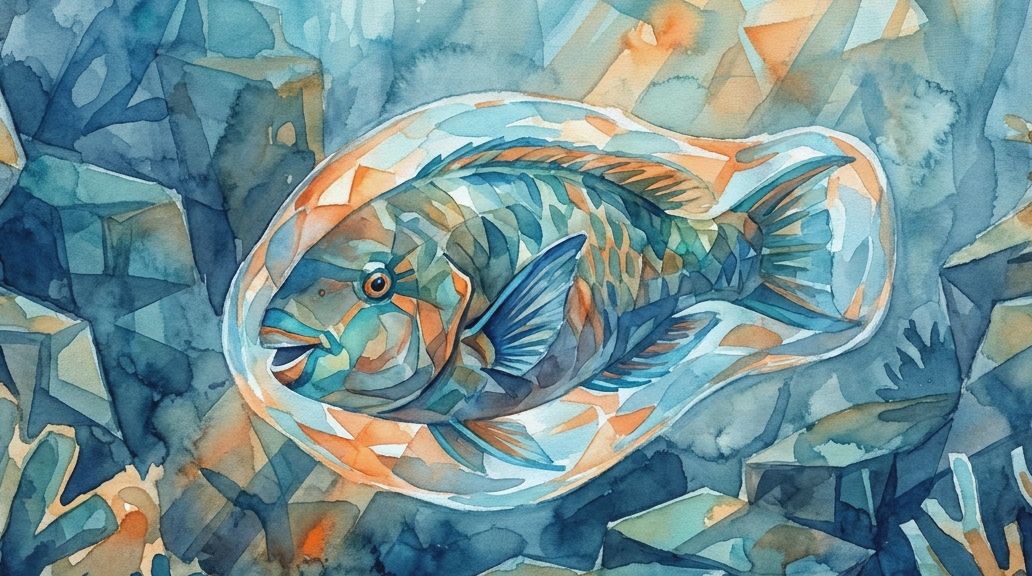
I once snorkeled near a reef at twilight and watched a fish tuck itself into this ghostly bubble. There was a moment where I felt like an awkward intruder at a slumber party-me in my human towel, the fish wrapped in a souvenir of its own mouth. I am still not over the intimacy of it.
The cocoon is ephemeral. By morning the fish tears it open or the current dissolves it and the reef gets its daily tiny drama back to baseline. Evolution really does some dramatic interior design on a budget: no sewing, no zippers, just glandular plumbing and chemistry. Also, please never bring this up at dinner unless you want to make everyone very committed vegetarians on principle.
What I love is how humbling it is: we obsess about high-tech security systems and these bright, ridiculous fish solve the same problem with spit. It is quietly poetic and absurd, and the ocean keeps gifting us reminders that survival can look weird, elegant, and slightly embarrassing all at once.