
The North Pond Hermit Who Outsourced Society
Category: Eccentric People 20th June 2026
Decades of solitude is not a hobby you pick up lightly, like croquet or philately; it is a career move, a formal resignation from the human comma. Christopher Knight, an otherwise ordinary American who took to the Maine woods in 1986, did precisely that: he vanished from civilisation and stayed gone for twenty-seven years. Not the romantic poet-with-wolf sort of vanished, mind you, but a practical, efficient absence-no chit-chat, no email, just a long, stubborn experiment in being unbothered.
How does one eat, keep warm and avoid death-by-awkward-conversation when one has renounced society? Knight answered with burglary. Over the years he repeatedly broke into camps and cabins around North Pond, stealing food, batteries, lantern mantles, soap and occasionally clothing. He was not a burglar of villainous relish; he was a chap with an inventory list and a terrible calendar for socialising. The pilfering was methodical, almost bureaucratic in its grim neatness: lift provisions, replace nothing, remain unseen. He famously powered his small comforts with stolen batteries and a radio, which served as his appointed parliament and occasional companion.
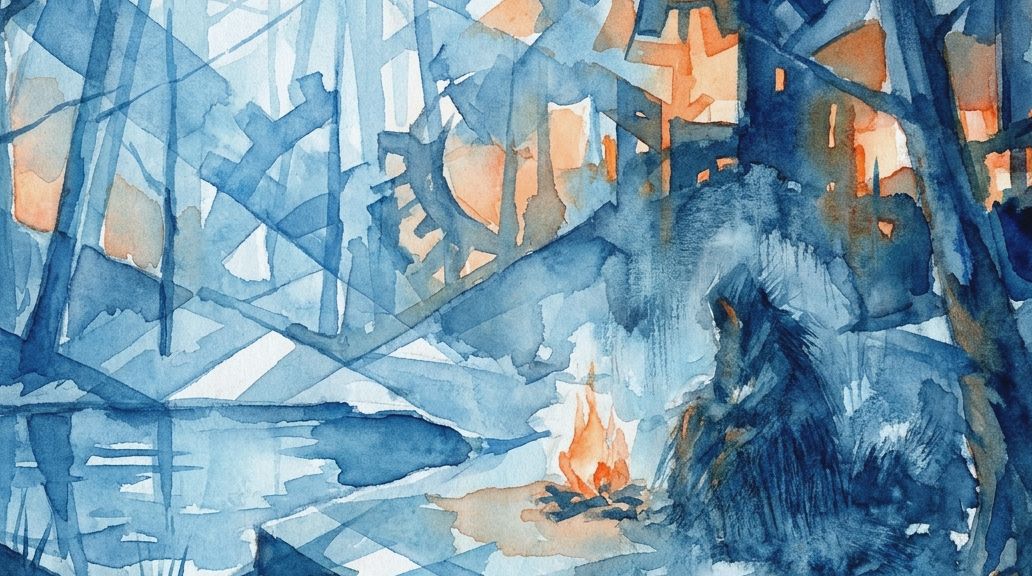
In 2013 the quiet strategy failed: Knight was caught and his strange life became a public curiosity. Journalists, true to form, queued up with metaphors and clipboards. Michael Finkel later told the tale with the proper mixture of sympathy and forensic curiosity in a book called "The Stranger in the Woods." The factual core remains oddly simple and stubbornly absurd-one man chose solitude not as ecclesiastical asceticism but as an engineering problem, and solved it by raiding the occasional cooler.
There is a thing to be learned here beyond the daft headline. Knight's retreat reads like a satire of modern life: he outsourced friendship to a radio, outsourced food to unlocked coolers, and in doing so he held up a mirror to our noise. It is an eccentric, slightly unnerving mirror-one that shows us how thin the veneer of civilisation can be when a man decides that other humans, for all their charms, are simply too much paperwork.