
They Hang Nazar Beads On Beehives, Of Course
Category: Superstitions & Lore 6th July 2026
Well, if you ever stroll past a row of beehives in rural Turkey and notice a blue glass eye blinking at you from a stick, do not be alarmed: it is not surveillance, it is superstition with good taste. The little blue beads, called nazar boncuu, are used all over Anatolia to ward off the evil eye. Folks there worry that too much praise, jealousy or plain bad manners will cast a curse called nazar that ruins crops, children, animals and, yes, honey.
The belief is older than my last pair of sensible shoes. The evil eye idea swims across the whole Mediterranean and beyond, but the Turkish blue bead became the poster child. Artisans blow the glass into concentric blue and white rings until it resembles an eye, then villagers strap it where the praise is strongest. That includes babies, shopfronts, wedding cars, and - I love this - beehives. Why beehives? Because productive things attract envy. A hive that hums with activity is a gossip magnet in a small place, and envy is the sort of pest that no hive wants.
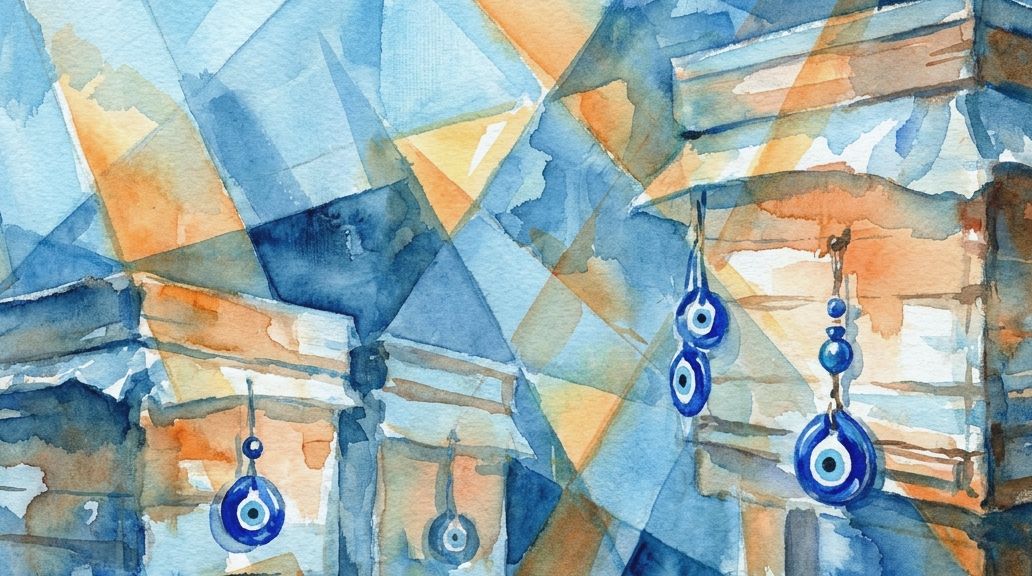
Practically speaking, a nazar on a hive is theatre and insurance. It tells the neighbours, loudly but politely, that someone cares enough to protect the bees. It also gives the beekeeper a ritual to perform when something goes wrong: a new bead, a small offering, maybe a muttered prayer or a spit-three-times move that is worth about as much as a weather forecast but helps calm people down. Ritual calms the human mind, which in turn means the beekeeper fusses less and checks the hive more cleverly. Call that indirect science if you want.
Anthropologists shrug and say the bead is a cultural amplifier: it channels attention and concentrates care on fragile livelihoods. I say it is charming and effective in its own way. The next time someone tells you that superstition is all nonsense, point them at a honey jar from a village that still ties blue eyes to wooden boxes. The honey tastes the same, but the story makes it sweeter.