
When a Grape Turns Your Microwave Into a Mini Thunderbox
Category: Modern Myths 12th May 2026
Once you see a grape make a tiny blue lightning show in a microwave, you will spend the next three days explaining it to relatives as though you are the Minister for Household Anomalies. The short, factual version: under very particular circumstances a halved grape concentrates the microwave field and produces plasma, which looks like a miniature, fruity thunderstorm.
The trick usually involves slicing a grape almost in two but leaving a little strip of skin connecting the halves, or placing two grapes so their skins touch. The grapes and their skin act like a poor man's resonator and capacitor. Microwaves slosh about, the electric field becomes extremely intense in the microscopic gap, water and vapour there ionise, electrons run amok, and you see sparks and glowing plasma for a few dramatic seconds.
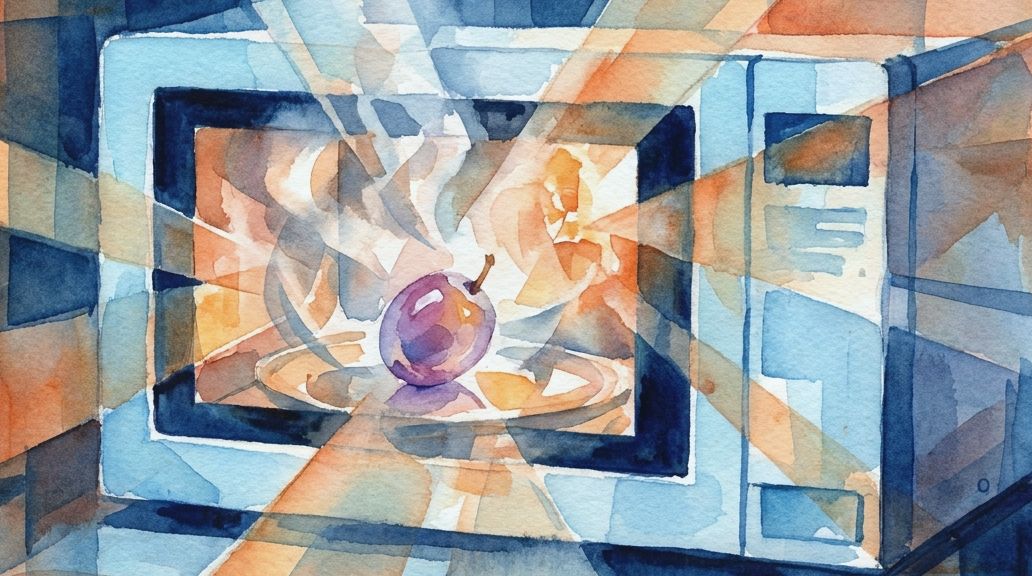
Nothing mystical is occurring, merely several pieces of mundane physics queuing at the tea trolley: dielectric heating in the watery flesh, field concentration at the tiny bridge, and the easily ionised vapour providing the seed for plasma. The spectacle is the same physics that underpins lightning in a storm, though on the scale of a very small and confused domestic appliance.
Practicalities and a small moral: it works best with a particular size and contact geometry, which is why not every grape produces an interior aurora. It also produces ozone smell, bright sparks and can damage the microwave's innards or magnetron if you are determinedly experimental. In other words: delightful to watch on other people's videos, graceless and insurance-unhelpful when attempted in your kitchen at midnight.
I must confess to being both delighted and faintly horrified the first time I saw it; it felt like watching a civil servant try to do improv. The grape-plasma incident is a modern myth turned demonstrable fact: a reminder that the universe enjoys both sparkle and bureaucracy, and sometimes serves them together in a fruit bowl.