
The House That Ate a China Shop (In the Best Way)
Category: Architectural Wonders 20th June 2026
Years ago I stumbled on a house that looks like someone told a teacup to live forever and it actually listened. In Chartres, France, there is a real-life cottage covered inside and out with mosaics made from shattered plates, glass, mirrors and bottle bottoms - a full-tilt ceramic confetti party assembled by one man, Raymond Isidore (1900-1964), who the town nicknamed Picassiette.
He was not an architect in the glossy magazine sense. He was a municipal road worker who collected discarded crockery from the town dumps and the streets, then glued the fragments into dizzying murals and patterns across walls, roofs, garden sculptures and floors. The effect is equal parts Gaud on a thrift-store budget and a folk-art fever dream that refuses to stop smiling.
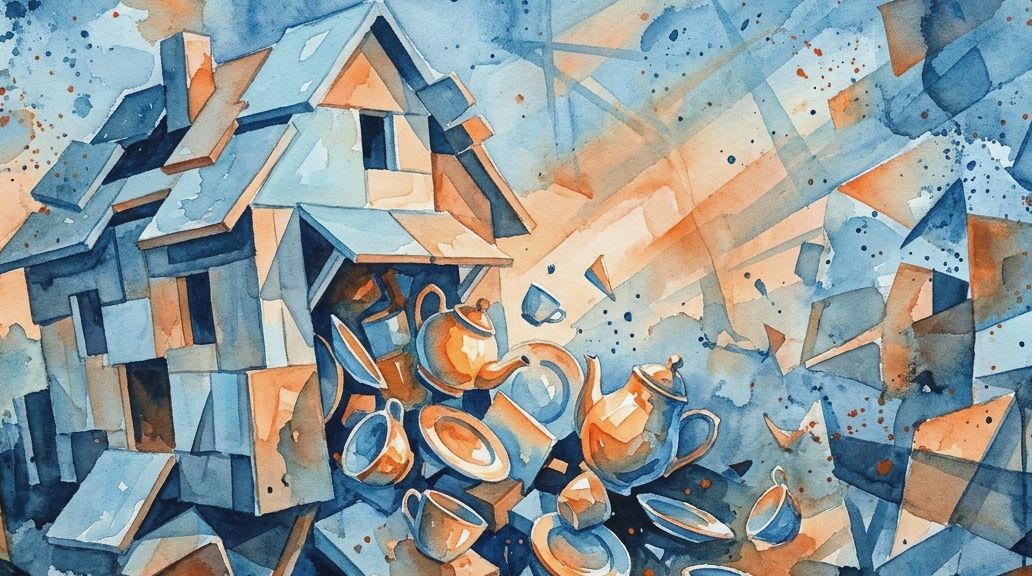
Why is it weird? Because it's a private obsession turned public monument: Isidore began decorating his house around 1938 and kept at it until his death in 1964, layering shards into religious scenes, landscapes, spirals and faces. Bottle bottoms become eyes. Plates bloom into flowers. Every surface insists you slow down and actually look, which is a subversive act these days when I have the attention span of a notification.
The name Picassiette is itself a joke: a play on the French phrase 'pique-assiette' (plate thief) with a wink toward Picasso. Locals went from baffled to protective, and the house is now preserved as a museum you can visit, which is beautiful because a man's habit of hoarding broken things turned into a communal inheritance. There is something tenderly defiant about fixing trash into something that hums.
I always leave feeling a little reconciled with mess. Maybe that is the architectural point: buildings can be stubborn hearts, not just roofs. Also, if you ever feel useless, remember that one road worker made a mansion of shards and the world now queues to take selfies with his ruin-glitter-ambition, apparently, can be politely ceramic.