
The Day They Bolted Jet Engines On A Train And It Absolutely Peaked
Category: Invention Fails 19th July 2026
Remember when innovation sometimes meant 'also very loud and alarming'? In 1966 New York Central took a stock-looking diesel railcar, stuck two jet engines on its roof, and called the Frankenstein child M-497, nicknamed the Black Beetle. The goal was simple and pure: what if we could shove airplane thrust onto rails and make regular trains go really, really fast? The result was gloriously literal and historically useless.
On a straight stretch of track in Ohio the Black Beetle cleared expectations and common sense by reaching 183.85 miles per hour. Yes, 183.85. You can almost see the office memo: 'Hey, can we go faster?' 'Yes, but also louder.' The test proved the physics - jets will happily push steel wheels along steel rails - but it also proved about eighty other problems, like track stress, noise, fuel economy, and emergency stopping that reads like a panic exercise in slow motion.
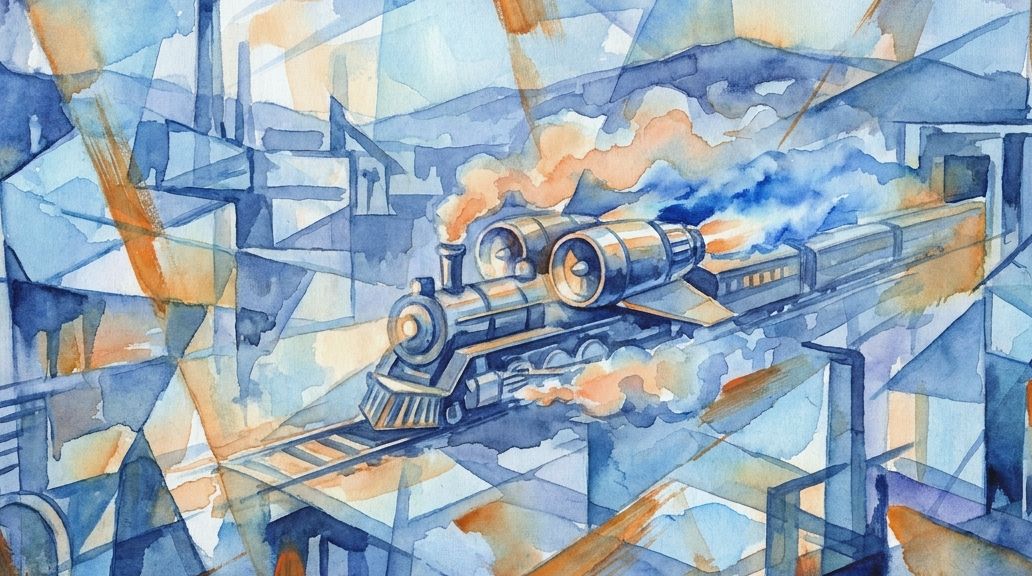
It looked like a commuter car wearing a fighter-jet bonnet and behaved like a midlife crisis in metal. The practical complaints piled up. The jet exhaust was miserable for anyone nearby, the speed demanded track upgrades that cost more than the fantasy itself, and scheduling normal service with such a one-off monstrosity was totally unrealistic. Also, imagine trying to warn a cow at 180 mph that you are about to pass; the social contract there is fragile, at best.
I love a prototype with attitude, but the M-497 taught the railway world a polite lesson: just because you can strap a rocket to something does not mean you should. It lived for a moment in newsreels and engineering notes, then got parked and quietly remembered. The idea resurfaced in brains and sketches for years, as inventions do, but the Black Beetle remained a glorious, aerodynamic misstep - a beautiful reminder that some experiments belong in museums and memos, not the morning commute.