
Mike the Headless Rooster: The Bird Who Refused Retirement
Category: Morbid Curiosities 6th August 2026
Consider a small town in Colorado, a hungry farmer, and a kitchen knife that misbehaved. On a September morning in 1945 Lloyd Olsen of Fruita tried to chop a rooster's head off for supper and spectacularly failed to finish the job. What remained was not a hat rack but a functioning remnant: most of the rooster's brainstem and a good chunk of his spinal cord survived. The bird kept breathing, swallowing, and, in true avian stubbornness, kept walking about.
Mr Olsen, who had the practical nous of any sensible chap presented with an extraordinary poultry problem, fed the bird with an eyedropper and took to calling him Mike. Mike toured county fairs, posed for photographs, and politely refused to be a mere culinary statistic. For roughly eighteen months he became a living exhibit of biological minimalism: just enough tissue in the right place to run the basic housekeeping chores of life.
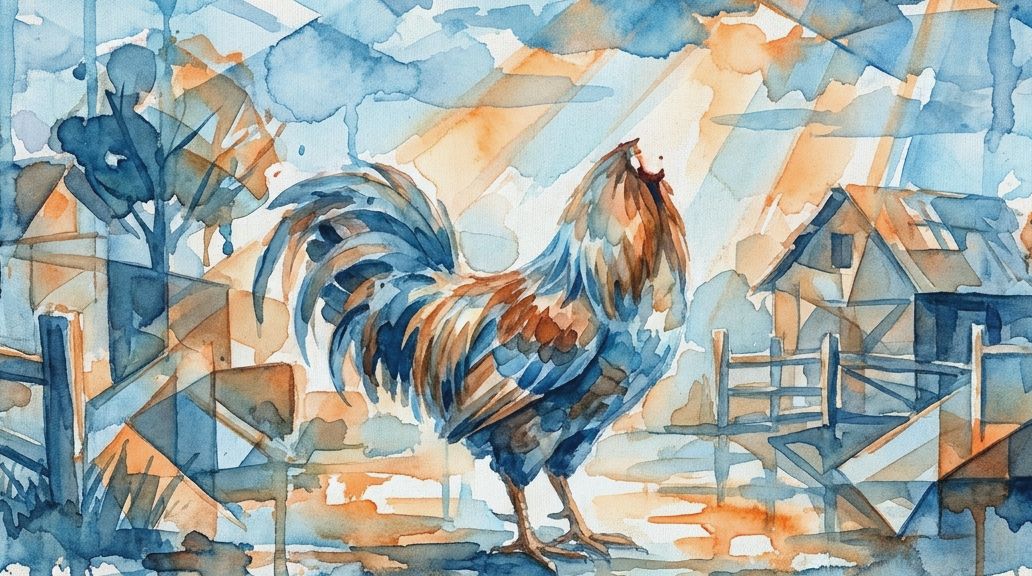
The explanation, dry and delightfully unromantic, is neurology. The brainstem controls breathing, heart rate, and reflex swallowing. Slice away the pomp and ceremony of higher cognition and leave the brainstem alone, and you get an organism that cannot plan its memoirs but can nevertheless gasp, gulp and sometimes roost. The wound apparently sealed well enough to prevent fatal haemorrhage, and with human help for feeding the bird limped on into legend.
This is where human absurdity takes its bow. Mike became both miracle and commodity: curious crowds, earnest newspaper men, and managers who sold admission tickets to gape at a creature that seems to say, in feathered tones, "I am not finished yet, thank you very much." It is a perfect small-town satire: commerce, compassion, and a headline all in a single feathered body.
Mike finally died about a year and a half later, reportedly choking while being fed, which is a tragically domestic end to a career that involved more gawking than gallantry. The story endures because it is both grotesque and oddly consoling: biology can be maddeningly efficient, and humans are supremely good at turning inconvenience into entertainment.