
The Shark That Time Forgot
Category: The Animal Kingdom 21st June 2026
Picture a fish that treats a 400th birthday like a Tuesday: the Greenland shark drifts in Arctic cold like a pensioner on a coastal tram and, by the clocks, simply refuses to die. Scientists using radiocarbon dating of eye lens tissue reckon individuals may live for roughly 400 years, making them the longest-lived vertebrates we know. That is not a typo. Four hundred years. You could have started a dynasty and still be considered a youngster by the shark.
It earns this ludicrous longevity by being the biological equivalent of someone who moves house twice a century: painfully slow, deeply sedentary and immune to modern fashion. Somniosus microcephalus lives in near-freezing water, which slows metabolism, slows growth and, apparently, racks up extra warranty years. Researchers date the central part of the shark's eye lens - a tissue laid down in utero and metabolically inert afterwards - using the spike of atmospheric radiocarbon from mid-20th-century nuclear tests as a clock. That little trick gives a surprisingly honest birthday candle count.
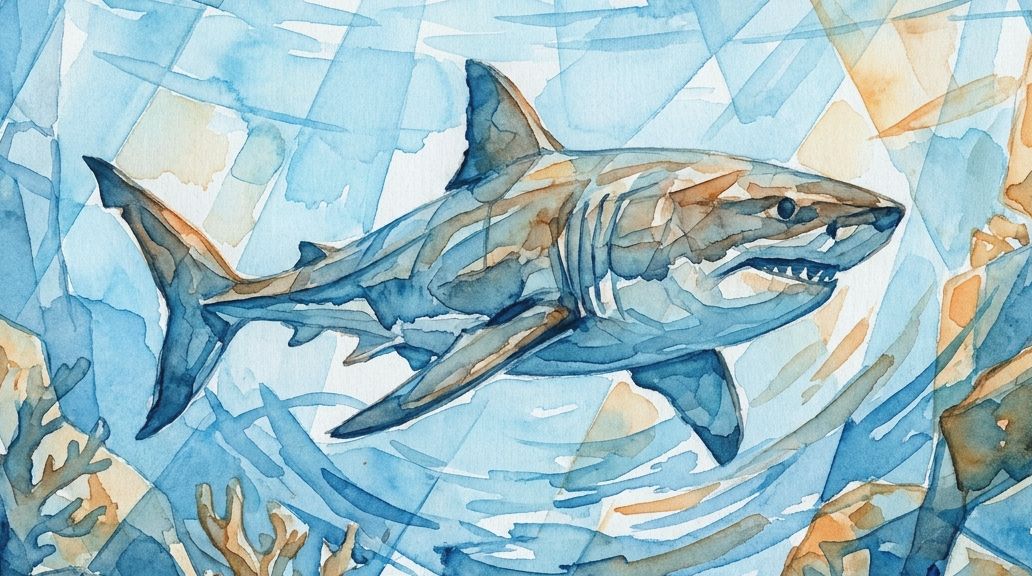
Because they crawl along at glacial pace and gain maybe only a few centimetres a year, these sharks don't hit sexual maturity until roughly 150 years of age. Imagine being 150 and finally getting to be useful at parties; for the Greenland shark it is a lifetime appointment. It explains why conservation matters: if a population is thinned, it will take centuries to recover. Chop down a forest, you plant saplings; chop down a class of 200-year-old sharks, you wait for the museums to answer your letters.
Their lifestyle is comic and grim in equal measure. They scavenge, eat seals, fish and sometimes things that smell of disaster. Folks have hauled up carcasses and oddities from their stomachs that read like the contents of a shipwreck's lost locker. Yet for all the weird menu choices, the real headline is time itself being weird: a vertebrate that lives long enough to outlast three musical eras, two empires and half a continent's worth of fashions.
In short, the Greenland shark is nature's slow-motion dare. It behaves like the planet's most patient relative, waiting out storms, ice and human idiocy while the rest of us panic about mortgage rates and mobile phone batteries. I admire that. If I could borrow a little of its constitution I'd probably be less cross at rush hour and more forgiving of bad coffee.