
Djenne's Mosque Gets Smothered In Mud
Category: Architectural Wonders 8th May 2026
There are landmarks you admire from a distance and then there is the Great Mosque of Djenne in Mali, which the entire town treats like a communal Victoria sponge. It is the largest mudbrick building on the planet, a colossal, honey-coloured behemoth made from sun-dried bricks and a paste of earth and organic filler. Every year the people of Djenne gather not to pray but to slather their famous mosque in fresh mud during a festival called Crepissage.
Now before you sneer, this is not quaint cosplay. Adobe hates rain; the seasonal downpours would turn walls into sad little rivers without regular maintenance. So instead of hiring a crew with a cherry-picker and an invoice you cannot pronounce, the town mobilises. Men, women and children ferry baskets of wet plaster up wooden ramps, smear it on with broad strokes, and pat it smooth with whatever tool they can find. The horizontal timber poles jutting from the facade, called torons, are both decoration and permanent scaffolding: built-in handholds and ladder rests that make the whole exercise possible without modern scaffolding.
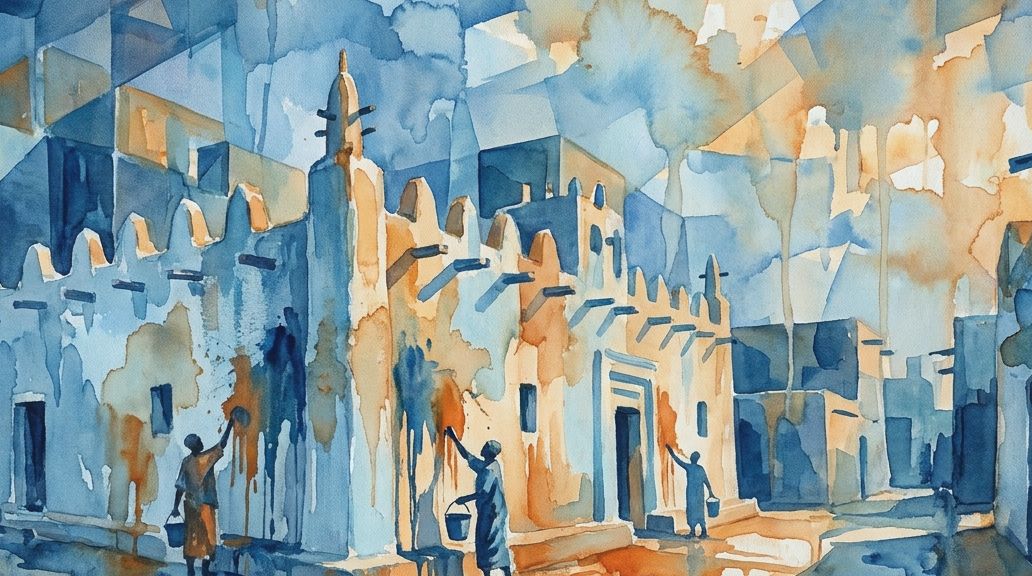
The mix they use is clever as it is crude: earth, sand and a mix of organic tempering material that helps the plaster bind and resist erosion. The process is communal, ritualised and loud. There is singing, food, bargaining, and a kind of civic pride that would make any glossy conservationist break into applause. UNESCO notices this sort of thing and added Djenne to the World Heritage list, which is useful because it brings attention and a few regulations - though the main workforce remains local hands and a lot of elbow grease.
So yes: a huge mosque, preserved not by machines but by a town with baskets and mud, once a year turned into a giant bake-off. It is both absurd and beautifully sensible. No crane, no contractors, just the whole community re-plastering their landmark like it was the family tent at a very muddy festival. Frankly, it is the sort of practical ingenuity that makes modern architects look under-dressed.