
We Lost a War to Emus
Category: Forgotten History 23rd July 2026
Today you will be told a story that sounds like a drunk scriptwriter's fever dream but is, to everyone's eternal embarrassment, actual history: in late 1932 farmers in Western Australia asked for help with a catastrophic emu invasion and the government replied by sending soldiers armed with machine guns. Yes, that sentence is allowed in polite company now.
The problem was simple and apocalyptic in the very boring way of bureaucracy: thousands of emus migrating inland after breeding season trampled fences, ate crops and generally treated wheat paddocks like an all-you-can-eat buffet. Farmers, already hit by drought and the Great Depression, lobbied for action. The Defence Department, in the mood for practical theatre, deployed a small military detachment equipped with Lewis guns and trucks to try to thin the herd.
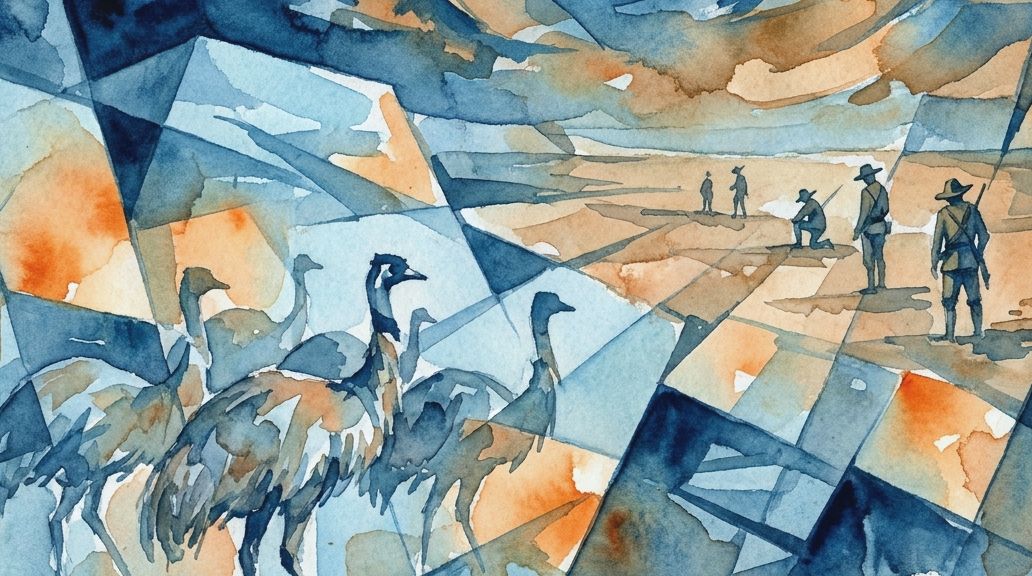
If you are already picturing a cinematic showdown you are forgiven; in reality it became a masterclass in humble defeat. Emus are fast, scatter in loose groups, and have the evasive agility of someone who has lived a thousand years dodging human plans. Trucks bogged down in soft soil, guns jammed or were awkward to aim at sprinting shaggy targets, and the birds split into little armies and rematerialised somewhere else like angry lawn gnomes.
The press had a field day, farmers grumbled and Parliament awkwardly revised tactics. After a few sorties the military bowed out and the government turned back to more boring measures: bounty systems, extra shooters hired by farmers, and repair of fences. Historians like to point out that the so-called 'war' was less a campaign than an institutional shrug, but the nickname stuck because humans will name anything that humbles them.
My favourite part is the tone: official reports half-sentenced as if admitting defeat is the same as a weather update. Years ago, when I first read this, I pictured clean uniforms chased by furious birds and laughed until I realised the farmers were miserable and the emus were just being emus, which is to say perfectly themselves and impossible to teach humility.
So the takeaway, if you want one that isn't smug, is this: history is full of moments where humanity solves problems by asking the military to be polite bullies and nature politely declines to cooperate. The Great Emu War remains an absurd, true footnote in forgotten history and a tiny, necessary reminder that some beasts do not negotiate.