
Fulgurites: Nature's Daft Glass Straws
Category: The Unclassifiable 10th July 2026
Honestly, it sounds like a prank. Lightning hits the ground, and where it lands it melts the sand into fragile, skinny glass tubes. They call them fulgurites, which is Latin for 'lightning', and that is exactly the sort of direct, dramatic name nature deserves. Imagine a skewer of glass blown by chaos itself and left lying in the sand like someone dropped a telescope.
They form in silica rich soils and beaches. The bolt blasts a narrow channel down into the ground, heating the stuff to proper ridiculous temperatures in a split second, melting quartz and glassifying the track. The result is a hollow, branching tube that follows the path of the current. Sometimes the things are only a few centimetres long, sometimes they are metres. They are delicate, often rough on the outside and glossy inside, like the world had an itch and scratched it with molten rock.
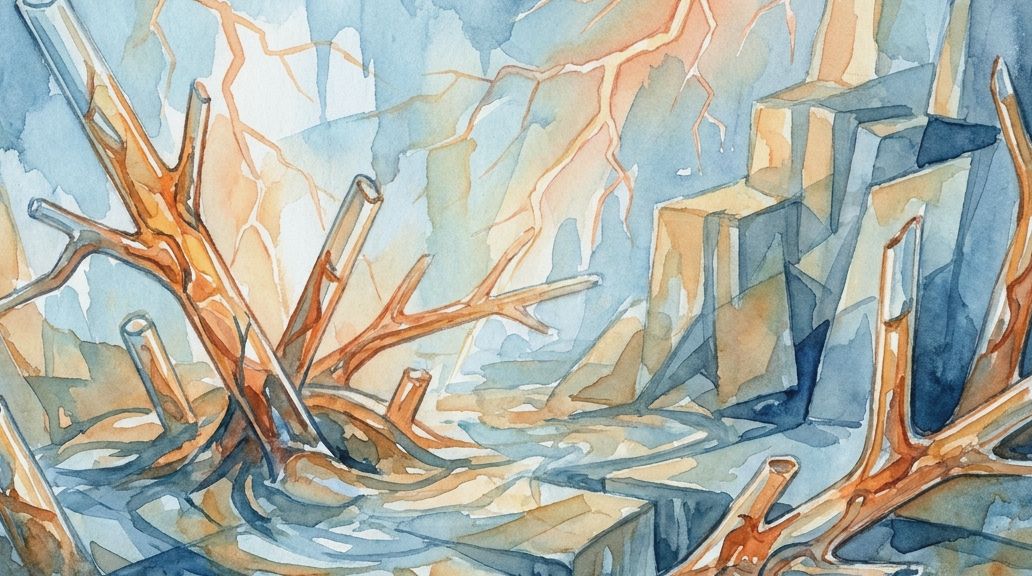
People call them "petrified lightning" because that reads well on a museum label and, to be fair, it is accurate enough. They appear worldwide after strikes and storms. You can get fulgurites in dunes, riverbanks, even clay if the mix allows it. There are tree fulgurites too, where a strike chars and vitrifies woody tissue into a black glassy tube. They are rare enough that if you find one you're allowed to act surprised and smug in public.
Years ago I saw one in a museum display and I stood there like a daft mug, expecting someone to admit it was props. It had all the seriousness of a fossil and none of the dignity. I asked the guard if it was fragile and he said, deadpan, 'Yes, mate. Don't be silly.' I left, because touching it felt like trying to stroke lightning.
They are proper reminders that the planet does tiny acts of showmanship without asking permission. The idea that a storm can, for an instant, turn the ground into blown glass and leave behind a thing that looks like nature mislaid a straw is brilliant. Put one on a shelf and watch Nan call it witchcraft; leave it in the sand and the tide forgets it like a modesty of gods. Either way, lovely and daft, innit?