
The Car That Wanted A Mini Nuclear Heart (and Nope)
Category: Invention Fails 16th May 2026
So here is one of those blessedly weird footnotes of human invention: in 1958 Ford unveiled the Nucleon, a concept car literally imagined to be powered by a small nuclear reactor tucked behind the passenger compartment. Not a joke. Not a sci fi movie. A design drawing and model that basically said: what if we put the atom in your trunk and called it progress?
Context matters because the 1950s were full of this sort of fervent optimism. Cities were going to be domes, breakfast cereals would send your children into orbit, and nuclear power was the new brand of miraculous. Designers loved clean lines and bold promises, and the Nucleon was the era flirting with atomic chic: compact, streamlined, with the technicolor confidence of a future that had not yet read its own fine print.
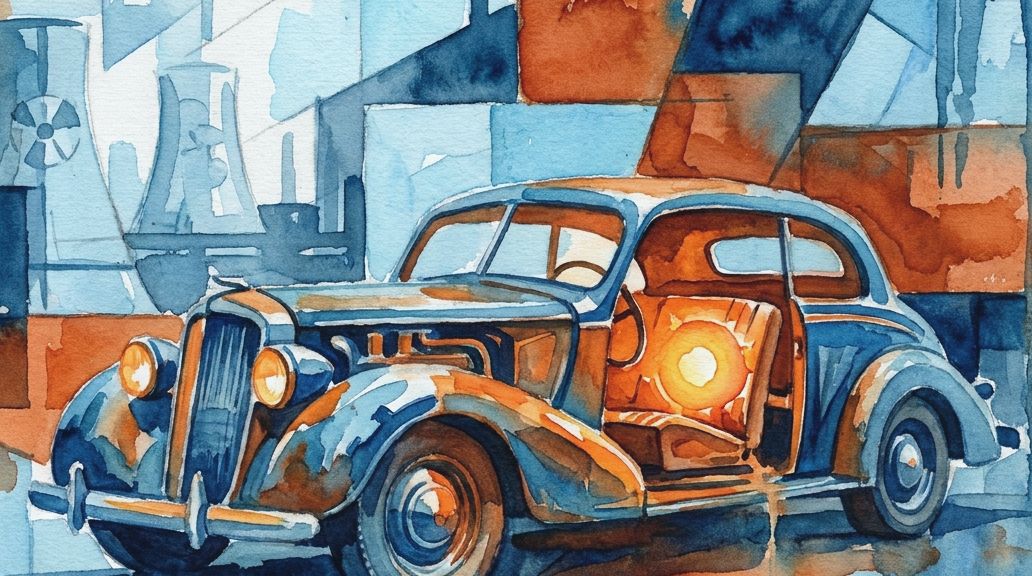
Ford's Nucleon never progressed past concept; engineers and safety thinkers quickly pointed out uncomfortable logistics. You do not put a fission reactor in a family hatchback without solving for shielding, crash safety, refueling infrastructure, and the mild issue of public panic. Ford's sketches even toyed with service stations that might swap out reactor modules the way we change batteries, which is both adorable and deeply alarming when you picture a petrol station with someone changing plutonium cartridges beside the candy rack.
What I love is how human this all is. We design things to fix the future while ignoring the tiny, boring present problems like physics and governance. The Nucleon is the automotive equivalent of buying a maxi dress for your honeymoon on the moon: aspirational, dramatic, and ultimately impractical. It stands now as a cultural artifact about how much faith people placed in technology and how ridiculous our mental furniture looked from the outside.
Also, please imagine the insurance forms. The Nucleon failed because it was fantastical in the wrong ways, and somehow that makes it endlessly comforting to me. It proves invention is often about dreaming dangerously and then getting very realistic reviews from engineers with hard hats and even harder patience.