
Edison's Creepy Talking Doll That Couldn't Keep a Job
Category: Invention Fails 11th May 2026
Listen, history has mood swings, but few are as weirdly committed to awkwardness as Thomas Edison trying to make dolls talk. In the late 1890s his team miniaturized the phonograph and stuffed a little wax-cylinder player into a doll's torso so the toy could say short recorded phrases. It was real engineering flex and also a spectacular social misread.
The dolls did actually work in the most Victorian way possible: you wound them up, the tiny needle ran across a little cylinder, and out came a brittle, tinny human voice saying a line or two. Except the sound was scratchy, the mechanism fragile, and the recordings had the uncanny valley energy of a hummed voicemail from 1890. Kids were supposed to be delighted. Instead many were creeped out, parents complained, and the thing broke easily - which is the worst combo for a kid's toy that is supposed to survive being used as a drumstick.
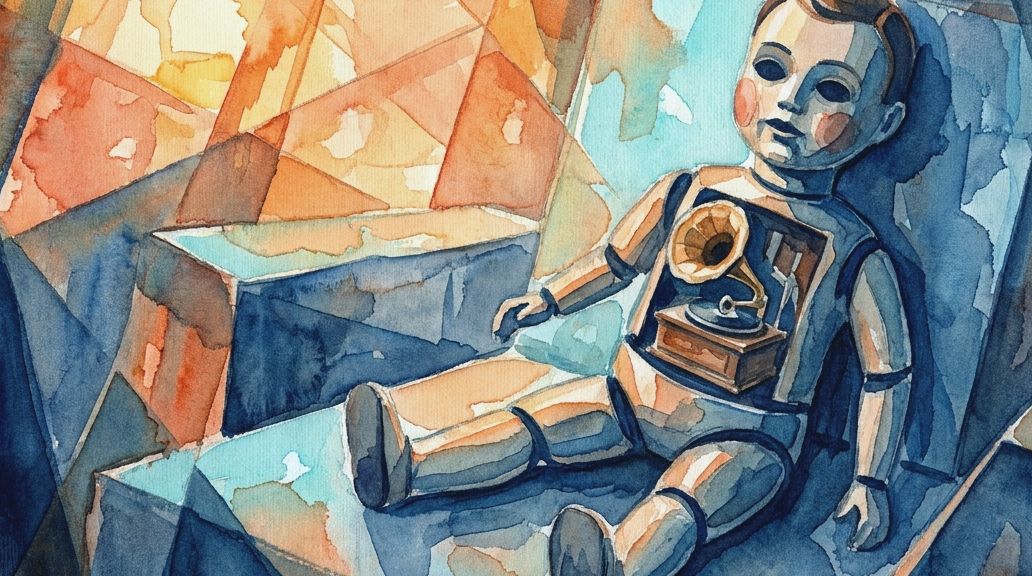
It gets better: these were some of the first mass-market toys to actually use recorded voice, so culturally they were kind of boundary-pushing. But pioneering has consequences. Manufacturing the miniature phonographs was expensive, the cylinders wore down fast, and replacement parts were not exactly available at the corner store. The dolls vanished from shops within a surprisingly short time and are now collector oddities priced like apology notes from the nineteenth century.
Also, imagine being the parent who has to explain to your kid why their doll sounds like a haunted gramophone. That image haunts me and also makes me laugh in a very specific way I save for internet dockets and antiques fairs. The talking-doll experiment became a lesson: just because you can put a thing inside another thing does not mean you should put it there. Edison gave us the idea of recorded voices everywhere, which is obviously invaluable, but for a minute there he also gifted the world a beautifully failed toy that proves innovation is messy, loud, and sometimes genuinely terrifying.