
When Strasbourg Decided to Dance Itself to Bits
Category: Forgotten History 18th June 2026
Naturally, the proper English response to civic panic is either a committee or a fiddle, rarely both, but Strasbourg in the summer of 1518 chose the latter with theatrical gusto. It began with one woman, historically named Frau Troffea, who stepped into the street and simply danced. She did not tap politely and go home; she danced until she could not, and then others joined because humans, like pigeons, favour ridiculous group behaviours when presented with odd precedent.
Contemporary municipal records describe dozens and contemporaries later whispered that as many as several hundred were involved - certainly enough that the city noticed a problem. People danced for days. Exhaustion, stroke and heart failure are recorded as causes of some deaths; how many exactly is uncertain, but enough for the event to lodge in the archives with an embarrassed cough.
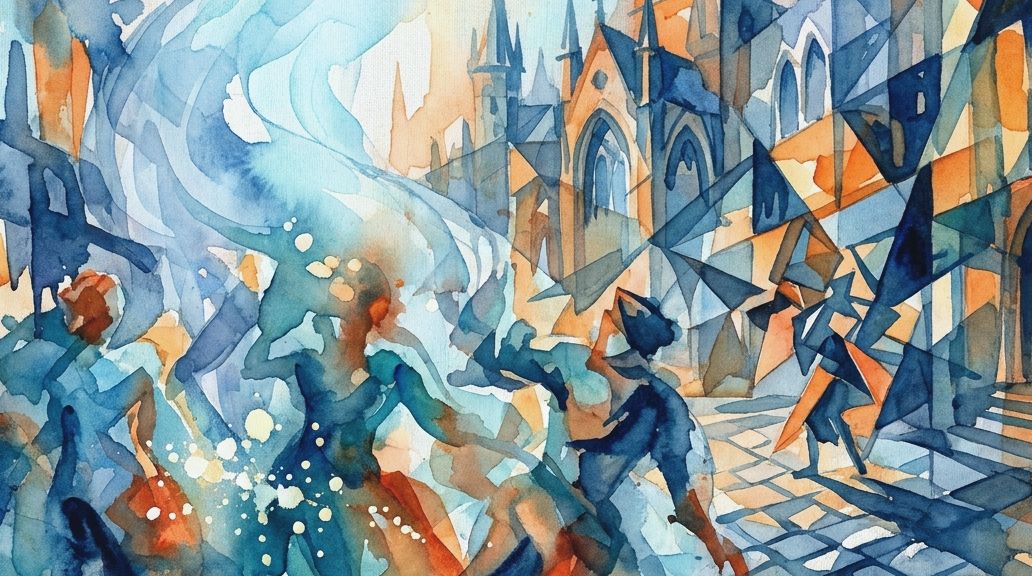
The response was quintessentially municipal and therefore gloriously inept. City officials, doctors and clergy debated diagnosis and remedy. One practical-minded committee decided to set up a stage and hire musicians, reasoning that if you could not stop the dancing you might at least control it and 'dance it out' of the afflicted. Readers of a certain temperament will recognise this as the bureaucratic equivalent of mopping up a flood by printing more towels.
Modern historians and clinicians disagree about the cause. Ergotism, the psychedelic poisoning from fungus on rye, has been mooted; it is atmospheric and romantic, like blaming the postman for the weather. Most scholars favour mass psychogenic illness: a community under stress, hungry, pious, and susceptible, where emotion becomes contagious and the body obligingly follows suit. Whatever the mechanism, it belongs to a family of medieval phenomena tagged 'dancing mania' and associated with pilgrimages to saints who specialised in movement disorders.
What endures is the picture: a European town in late summer where the daily agenda included communal stamp and twirl, municipal musicians, and the baffled paperwork of officials who, for a brief and graceful interval, treated public health as if it were a badly organised festival. If nothing else, the episode is a perfect little monument to human absurdity: given a small strange thing, we will organise, politicise, and occasionally hire a band to fix it.