
They Tried To Wallpaper Your House With Bubble Wrap
Category: Invention Fails 25th June 2026
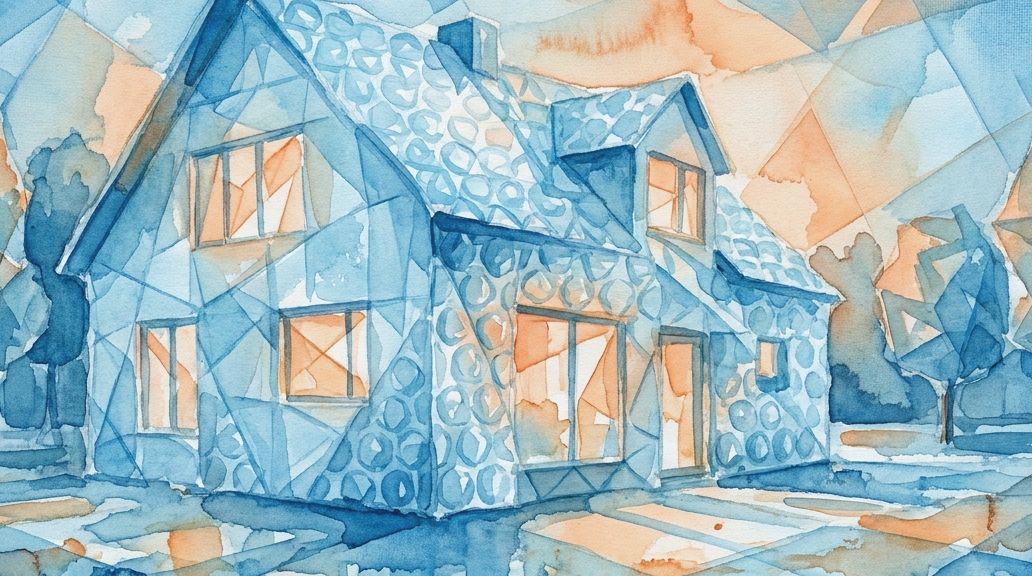
Everybody loves popping bubble wrap. It is the small, illegal pleasure of civilization: a hundred tiny detonations of private joy. But what most people do not know is that bubble wrap began life as an idea so absurd that it could only have come from the fevered mind of someone who thought patterned wallpaper needed a sense of humour.
In 1957 two chaps, Alfred Fielding and Marc Chavannes, glued together two shower curtains, sealed air between them and produced a sheet of plastic bumps. Their plan was to sell it as textured wallpaper. Imagine that: a sitting room decorated like a washing machine drum. Not surprisingly the wallpaper business did not queue round the block.
They did not immediately give up. For reasons only accountants and optimists understand they tried using it as greenhouse insulation. It kept heat in, but it also made plants look like they had been invited to a disco. The real triumph arrived when someone realised the stuff was fantastic at protecting fragile items. Packaging became the destiny bubble wrap had always been hiding under its plastic skin.
Fielding and Chavannes went on to form Sealed Air in 1960 and the little bubbles migrated from dcor catastrophe to industrial hero. Today the sight of a box padded in bubbly plastic is as ordinary as a kettle and far more useful. But the origin is the best part: the world was almost condemned to live in rooms covered in perpetual, polystyrene cheerfulness.
I remember as a child treating sheets of packaging as a moral puzzle: to pop or not to pop. The moral answer is always to pop. Yet every time I press my thumb into those tiny hemispheres I think of two inventors clutching a roll of failed wallpaper and deciding to sell protection instead. It is a reminder that inventions often succeed by accident, and that some accidents are glorious. If you ever meet a piece of wallpaper trying to be affectionate, give it a quick prod and then send it to the recycling bin.