
The Fungus That Quietly Runs a Forest
Category: The Unclassifiable 9th August 2026
Picture a thing so vast it could get lost without a map, and then resent the very notion of maps for being so pedestrian. Under a patch of Oregon woodland there lies Armillaria ostoyae (now often called Armillaria solidipes): a single fungal individual whose mycelial threads braid together across roughly 2,385 acres in Malheur National Forest. It is, quite literally, a living carpet the size of a small county fair and likely as old as half your ancestors' best excuses.
Scientists discovered the scandalous unity in the 1990s by running genetic tests on samples that, to the naked eye, looked like many separate mushrooms. The tests announced, with the cheerful malice of a tax inspector, that the lot belonged to one clone. One organism. One very ambitious fungus. Estimates of its age vary, typically between about 2,000 and 8,000 years, which means it was politely growing while humans were still arguing about whether goats made good soldiers.
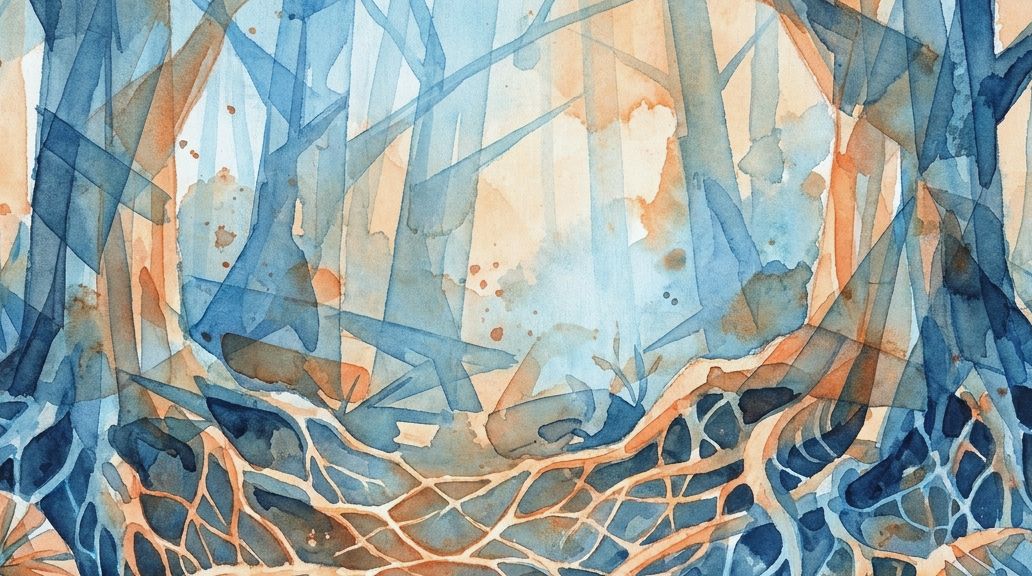
It does not lounge in the hedgerows knitting; Armillaria is both gardener and arsonist. Its subterranean mycelium invades tree roots, saps the host, and occasionally kills whole stands of timber, producing the telltale honey-coloured fruiting bodies we call mushrooms only when it feels like airing its grievances. Forest managers alternately curse it, study it, and remind themselves that nature does not fill in forms.
Why does this matter beyond being a splendidly querulous curiosity? Because it rearranges our tidy categories. Is the forest a community of trees? Is it a single organism spread thinly and sulkily underfoot? Armillaria forces ecology to file paperwork it did not ask for and then stamps the papers with a damp, fungal paw.
I like to imagine it sending an annual complaint to the county: "Please cease planting more delightful but inconvenient pines. Yours, A." It will not sign because signatures are so human. It prefers to be felt as a slow pressure under the soil, a persistent reminder that life can be ambitious, patient, and maddeningly collective. And it will almost certainly outlast our misplaced certainties about ownership, planning permission, and polite society.