
Lenin Guards the Antarctic Pole of Inaccessibility
Category: Geography & Maps 3rd August 2026
Honestly, if you are the kind of person who likes maps and also ghost stories, the Antarctic pole of inaccessibility is the place your brain will throw a small tantrum of delight. It's the spot on the Antarctic continent that's the farthest from any coastline - the geometry equivalent of the introvert's holiday home. In 1958 a Soviet Antarctic team walked to that lonely dot (listed at about 826S 548E) and left behind a little monument: a small bust of Vladimir Lenin mounted on a plinth, with a wooden sign marking the coordinates.
Picture it like this: a perfectly logical, bureaucratic map problem solved with one of history's moodiest sculptures. The Soviets weren't planting flags to say "we own this" so much as leaving an archetypal Cold War shrug - a portrait of ideology in a place nobody would pop by for tea. Over the years the bust has been half-buried by snow, discovered by later expeditions, and photographed like a weird travel influencer post from 1958. It's human, it's absurd, and it's exactly the kind of monument the planet did not ask for but absolutely needed.
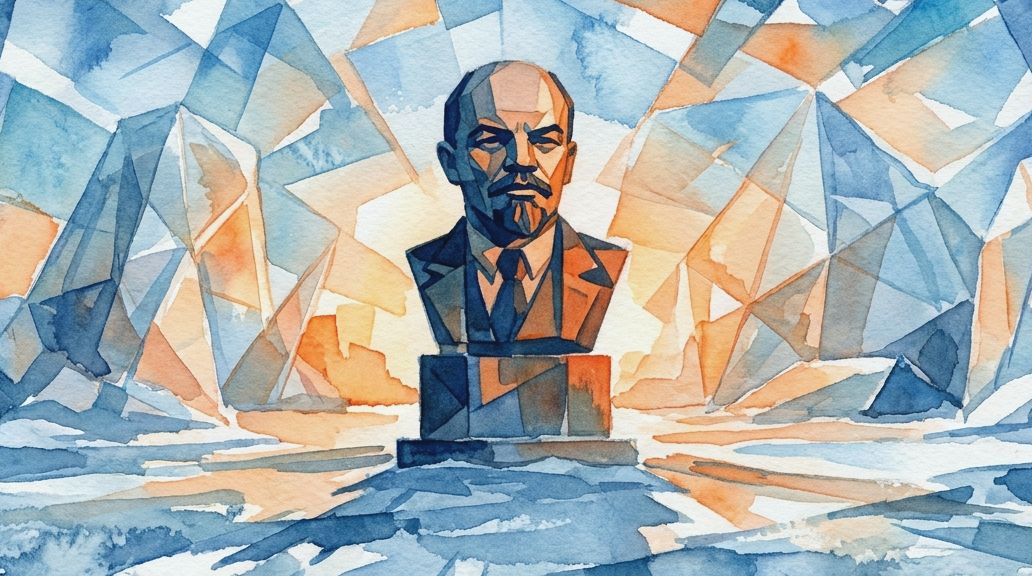
Geographically, a pole of inaccessibility is a precise thing: the point on a landmass that maximizes distance to the surrounding coastline. It's different from Point Nemo, which is the oceanic pole of inaccessibility and beloved by sailors and sci fi fans. The Antarctic variant is ruthless with its solitude. The Lenin bust is a punctuation mark: a stubborn little human trace in the middle of a white silence that goes on and on until your boots lose confidence.
Visiting it is not a casual weekend plan. Expeditions are rare, expensive, and involve negotiating a frozen ledger of logistics and patience. Which is part of the charm: the monument reads like a prank left by history for the few people who enjoy walking where maps try to be dramatic. I love that humanity's answer to cartographic loneliness was to glue a familiar face on the ice and call it a day. It feels like someone left a mixtape in the middle of nowhere and signed it with a statue.