
When Aldini Zapped a Corpse and the Face Twitched
Category: Morbid Curiosities 5th August 2026
Nobody at the time called it entertainment. Yet there, in front of a grim, curious crowd, a scientist clipped wires to a fresh corpse, turned the current on and the body did something highly impolite: it twitched, grimaced and one eyelid flicked open. Giovanni Aldini, nephew and disciple of the frog-pincher Luigi Galvani, was touring Europe showing that electricity made dead muscle behave as if it had a mind of its own.
These demonstrations peaked in 1803 in London, where Aldini worked on the corpse of a man recently executed for murder. Apply a voltaic pile to a jaw and the mouth would clench; touch the nerves of the face and the features would pull into a contortion that made the audience gasp and wish they had stayed home. Observers later wrote the jaw clenched, the limbs moved and the eye opened - not because the fellow was coming back, but because nerves and muscle obey physics for a stubbornly long time after the light goes out.
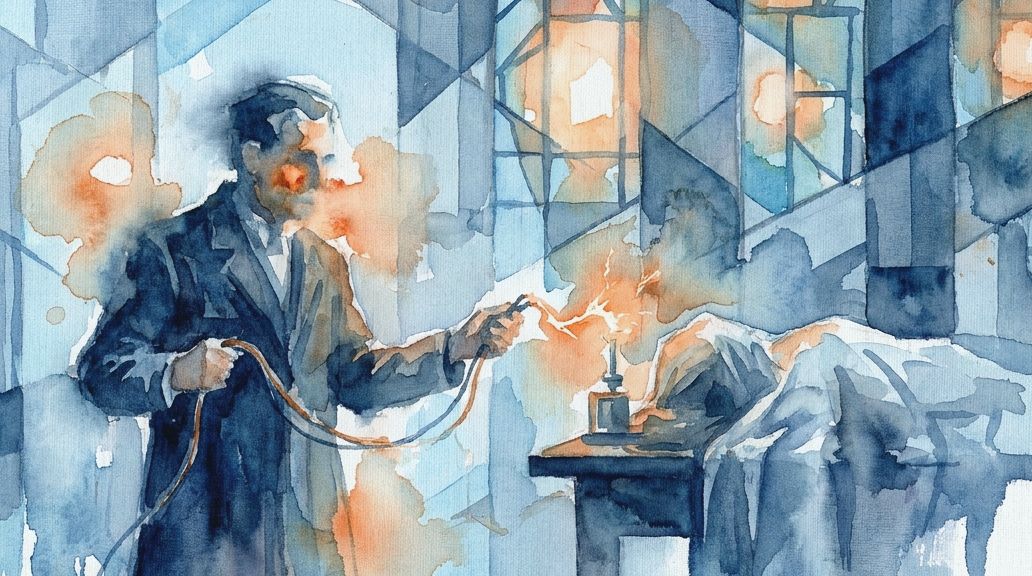
It was grotesque, theatrical and scientifically useful. Aldini wanted to probe the boundary between life and death, and he forced the public to confront it with a kind of grim vaudeville. The shows fed a new, modern anxiety: if electricity could make a corpse twitch, could it also make a corpse walk? Writers, playwrights and the tea-room gossip mill found the notion irresistible. The demonstrations are widely credited with helping to seed the idea that later turned into gothic stories about reanimation.
Today his experiments read like a footnote to both physiology and horror fiction, but at the time they were cutting-edge physiology performed with the stagecraft of a carnival. People left uneasy, some cheered, some swore Aldini was meddling with the devil, and a few sensible souls simply decided hanging was a job best finished without further scientific curiosity. If you want a morbid image that sums up the Enlightenment's mood, picture a corpse twitching under wires: science thumbing its nose at death while polite society tried to tidy its hat and pretend nothing rude had happened.